Solver
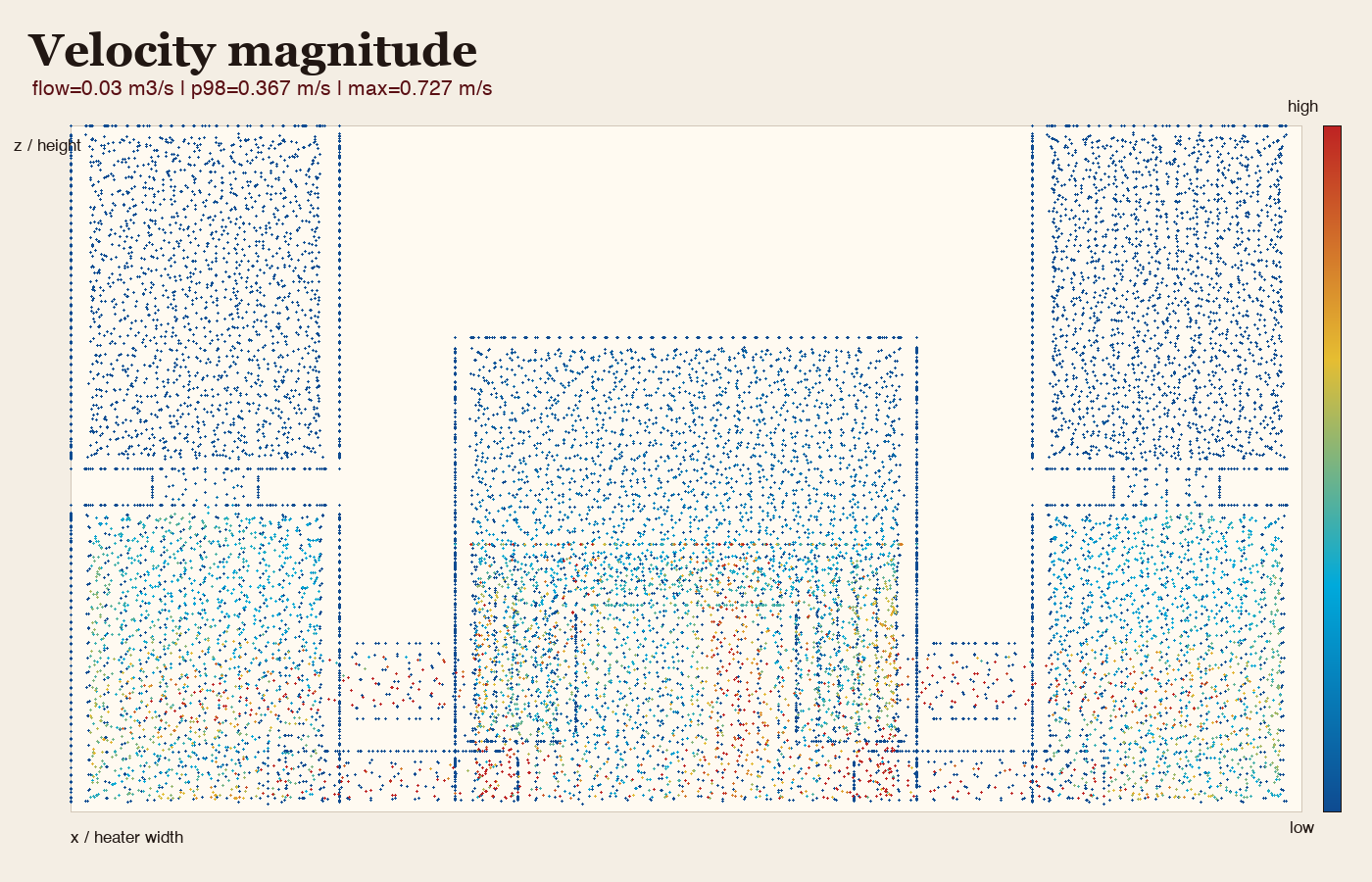
stableincompressible flow previewOpenFOAM result pack
Flow diagnostics
Cells
88,791real fluid meshFlow
0.03 m3/sbaseline inletP98 speed
0.367 m/svelocity magnitudeL/R delta
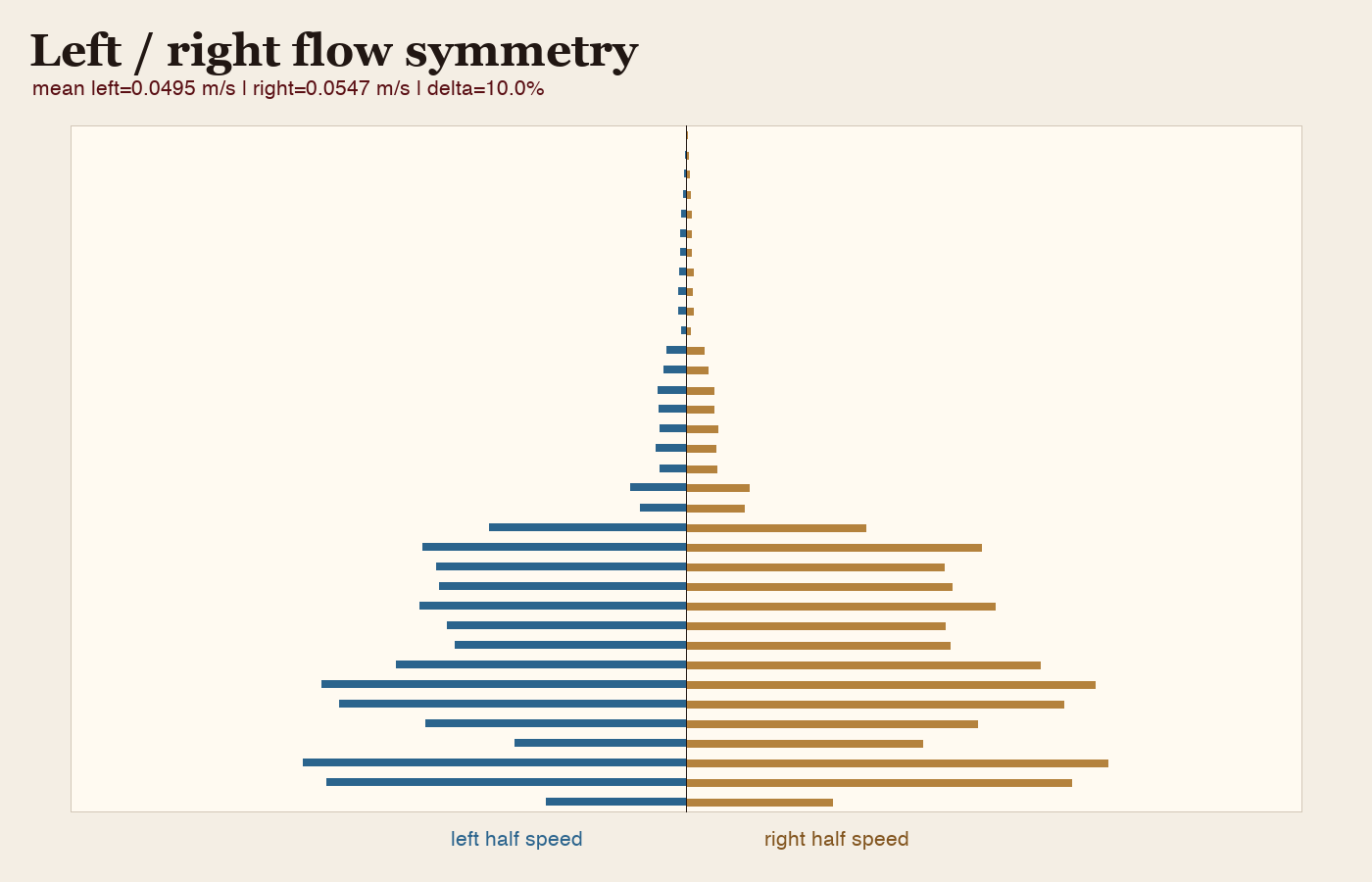
10.0%rough symmetry metricVelocity
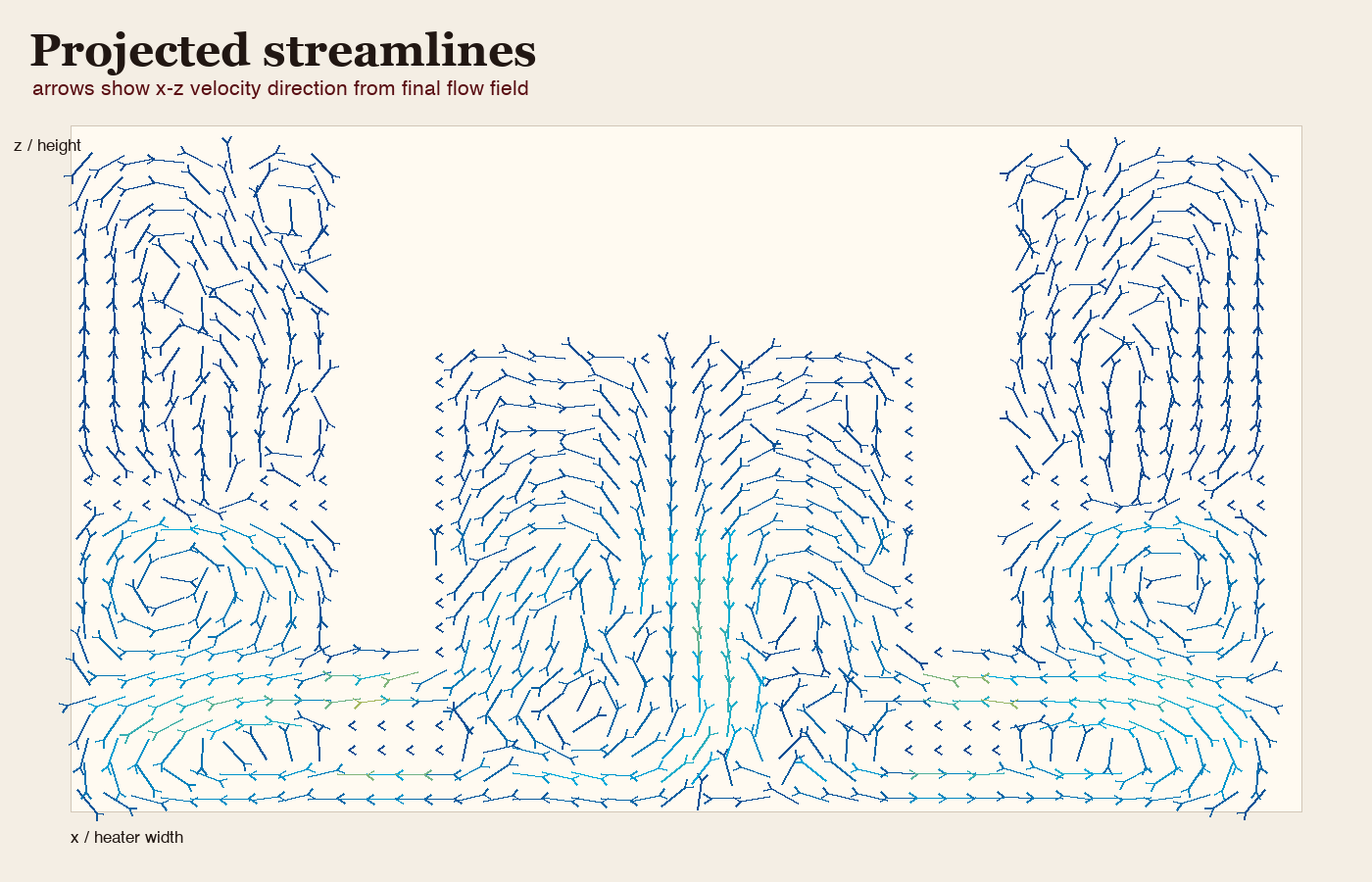
Streamlines
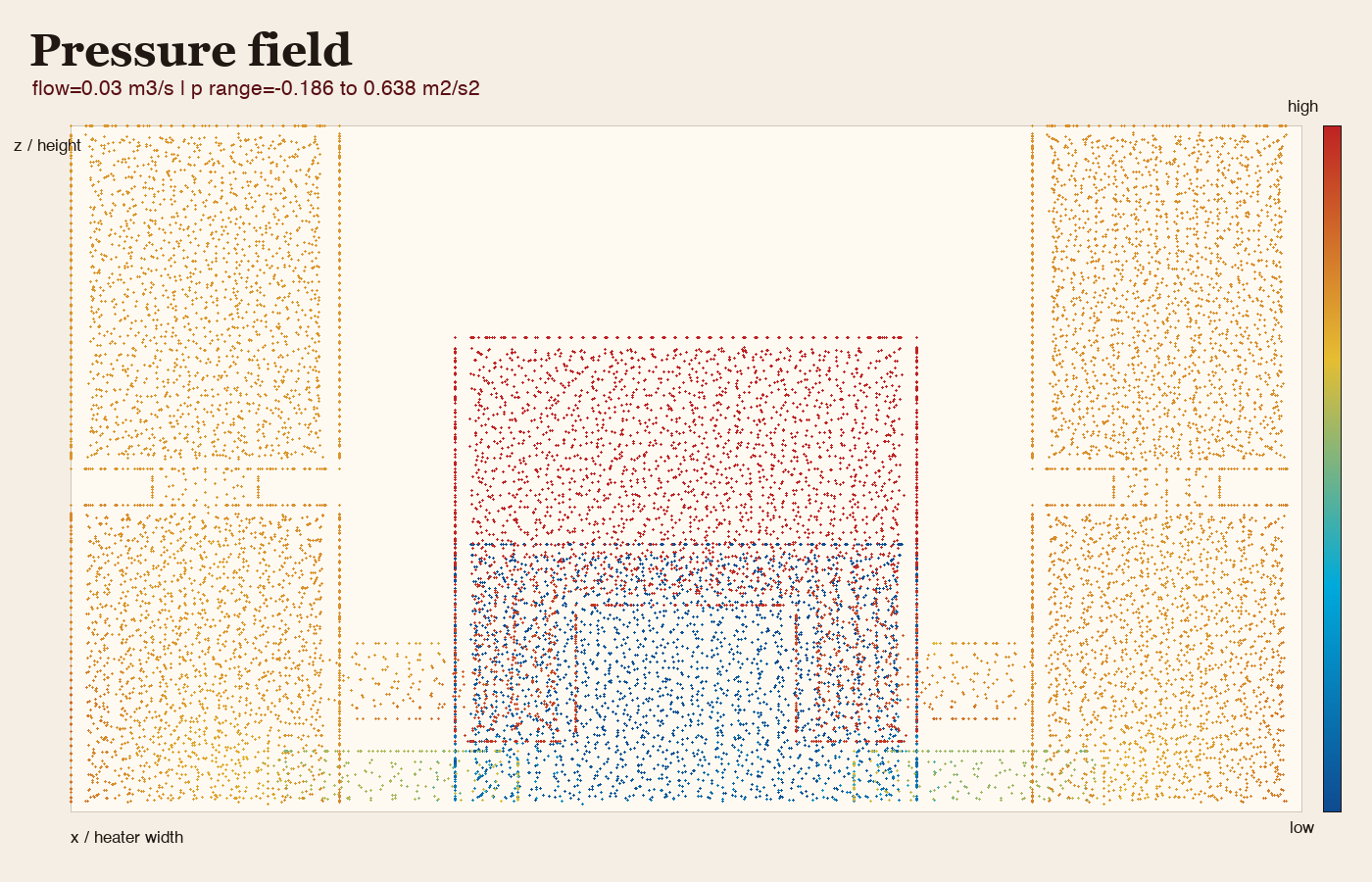
Pressure
Symmetry
Warm solver
stablecompressible warm-flow bridgeInlet temp
127 C400 K safe warm caseWarm p98 speed
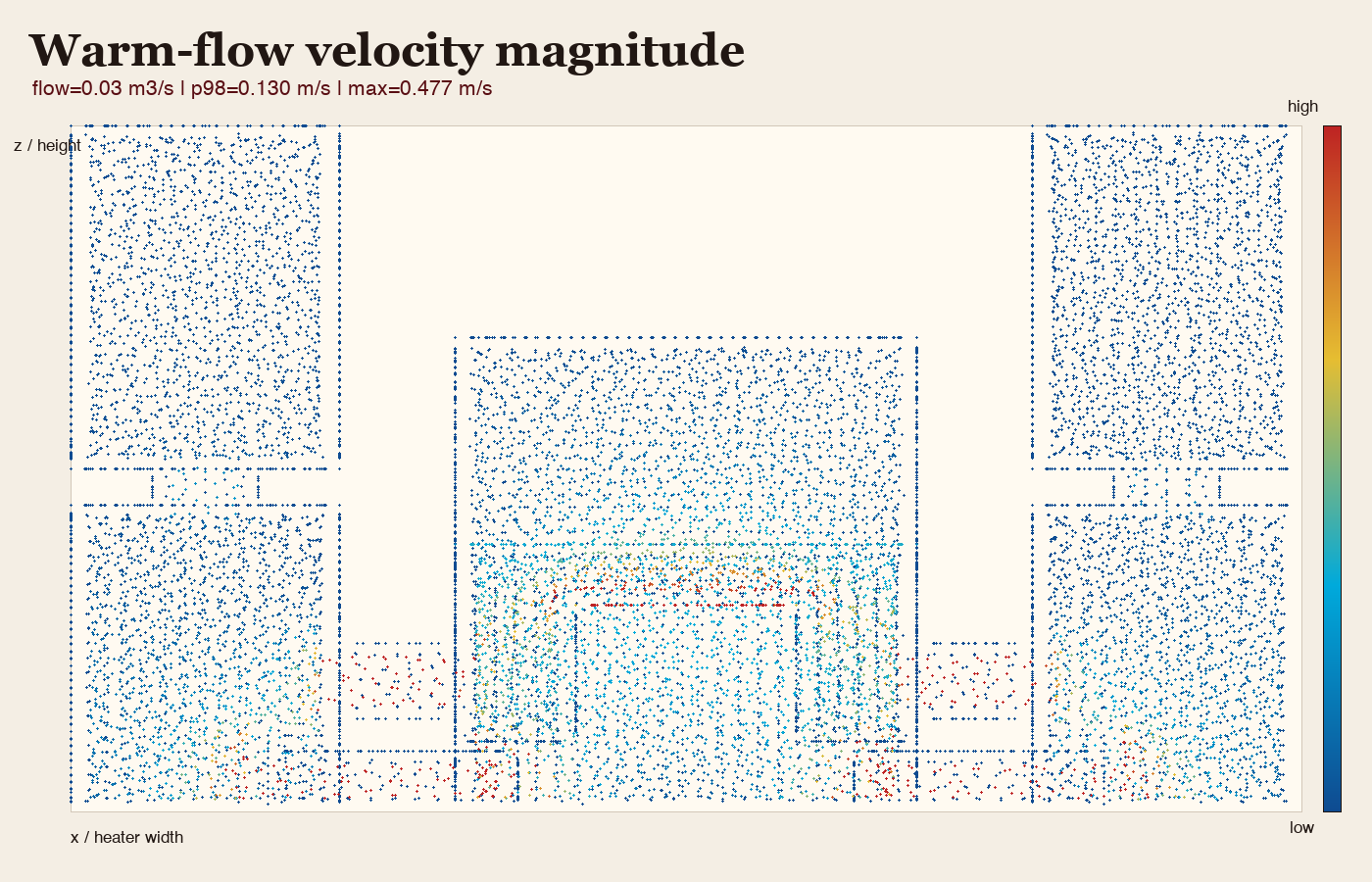
0.130 m/slower thermal velocity fieldWarm L/R delta
0.9%very balanced in this runT range
20-127 Cstable temperature fieldWarm temperature
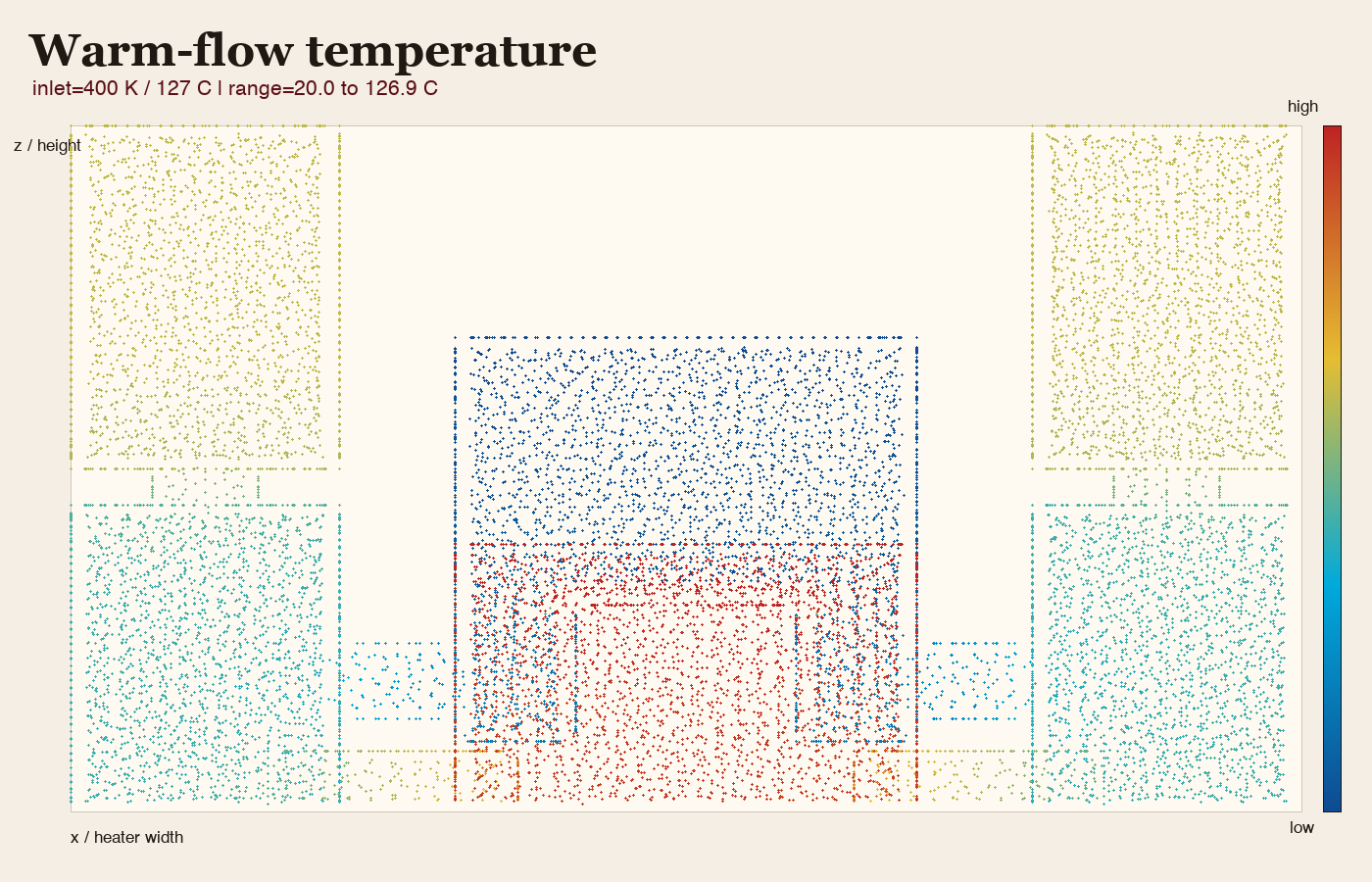
Warm velocity
Warm density
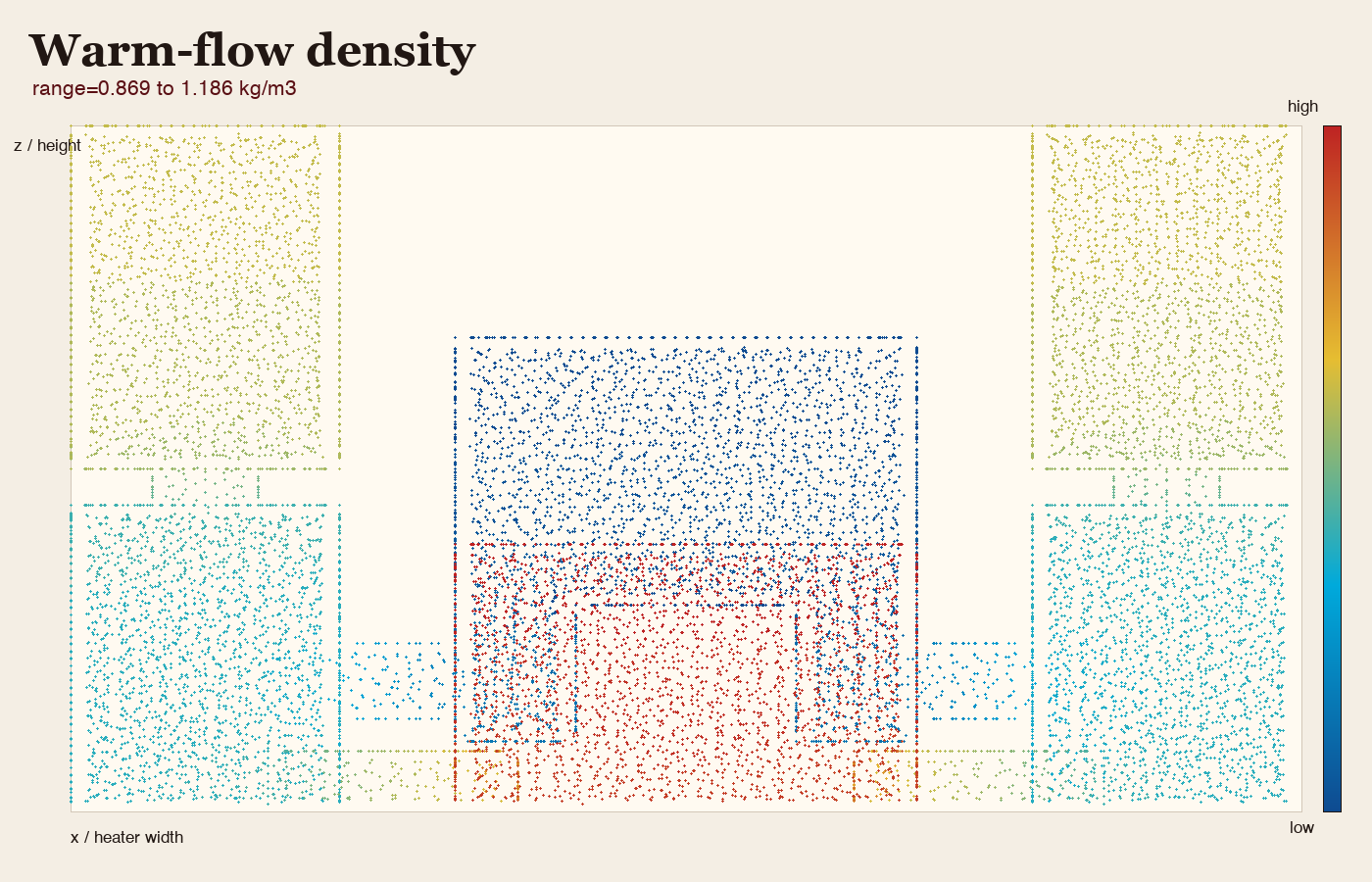
Warm simulation note
- This is the second simulation after the isothermal baseline.
- It adds compressible warm gas at 400 K without jumping to 700 C.
- The run completed cleanly to 0.08 s.
- Next increase is 500 K, then buoyant gravity, then masonry coupling.
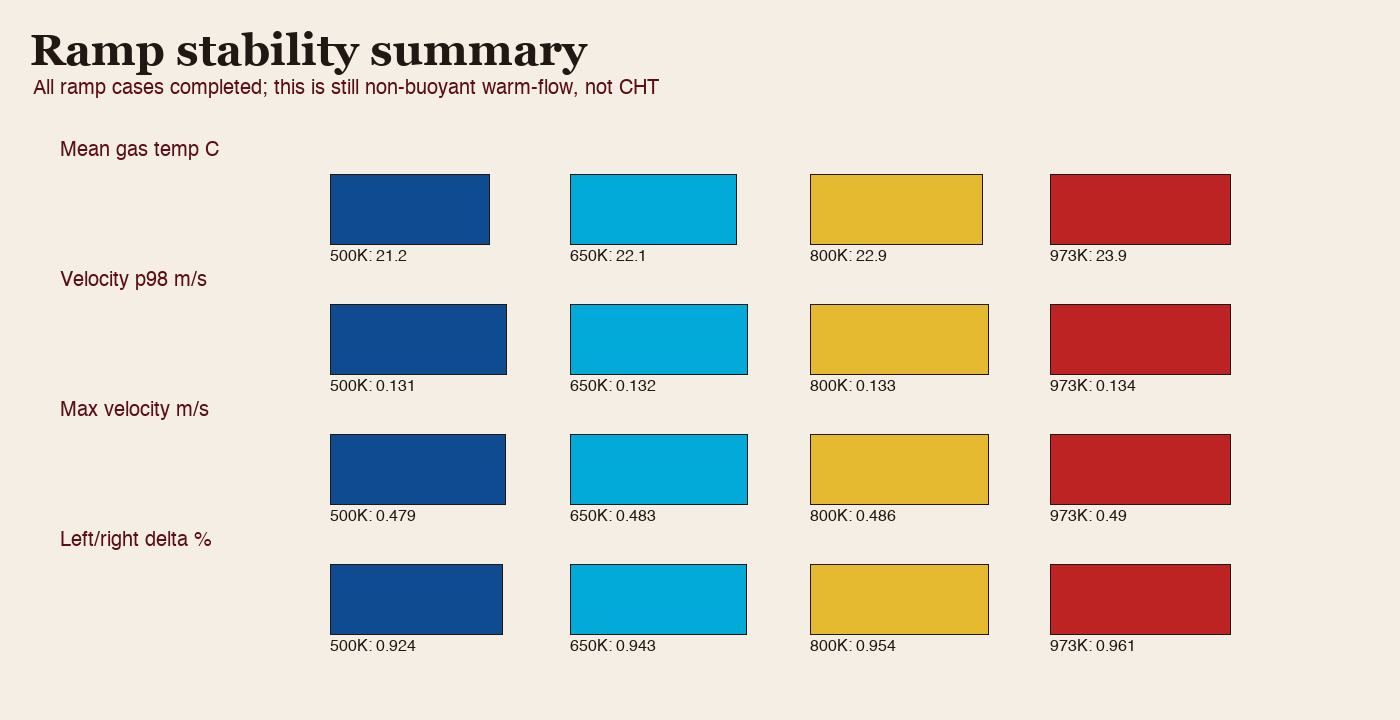
Ramp
stable500 K to 973 K completedMax tested
700 C973 K inletRamp p98 speed
0.134 m/sat 973 KRamp L/R delta
1.0%very balancedBuoyancy
stableprghPressure outlet fixTemperature ramp
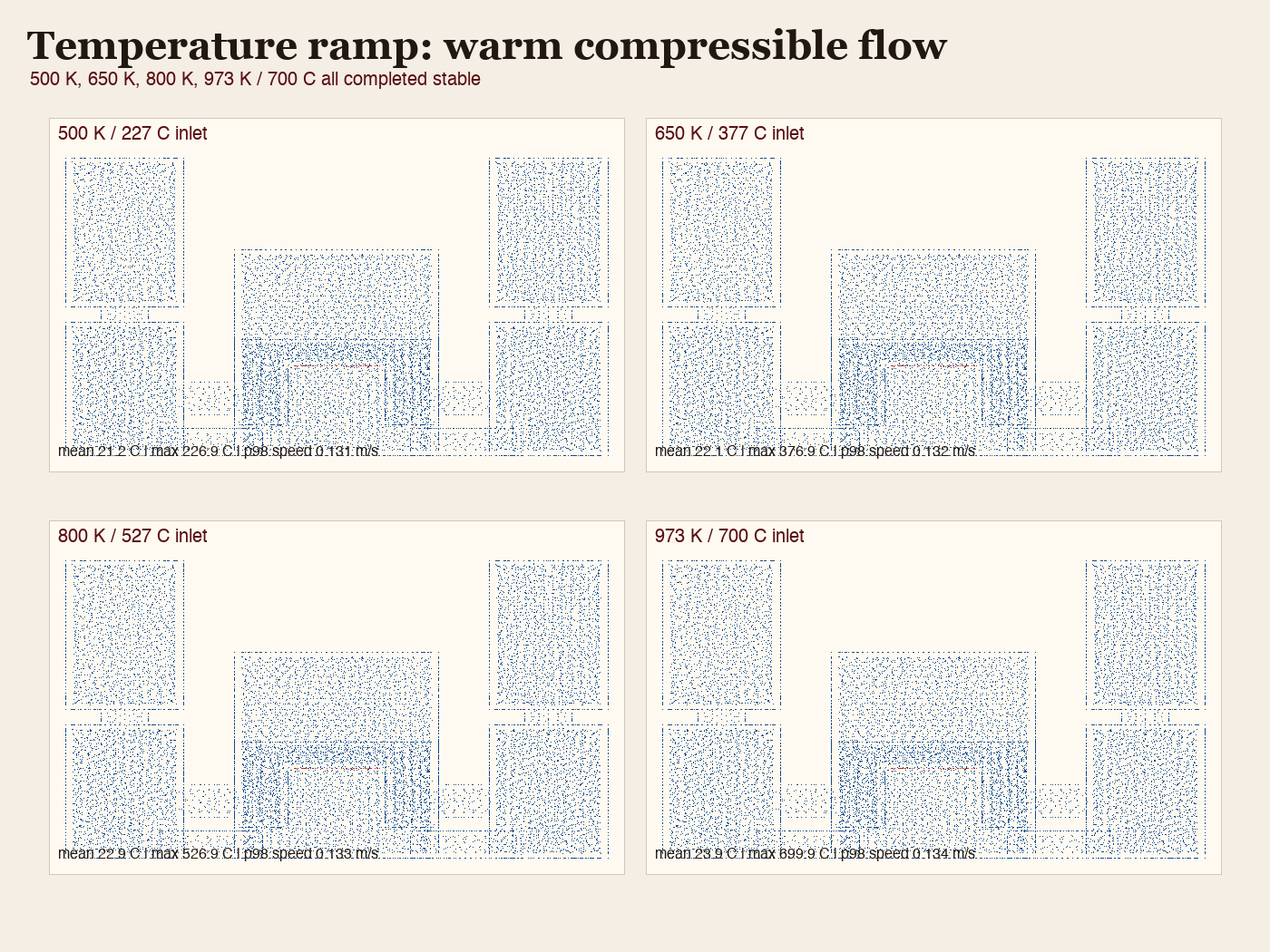
Ramp summary
Buoyant solver
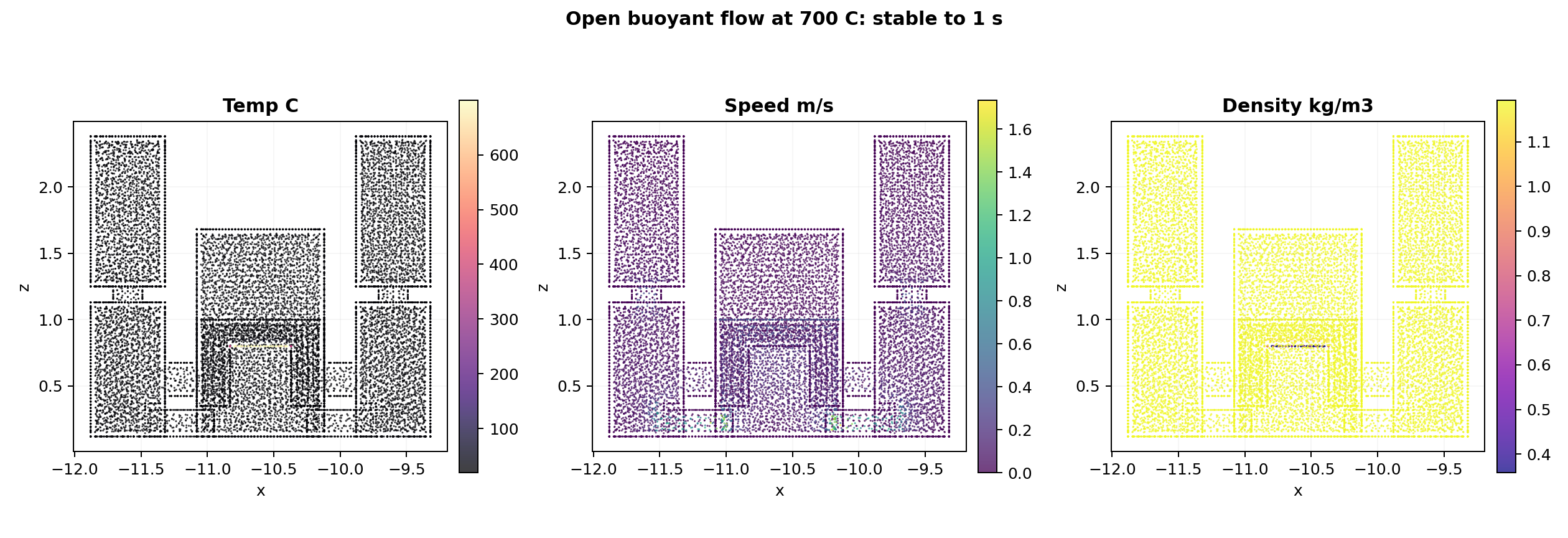
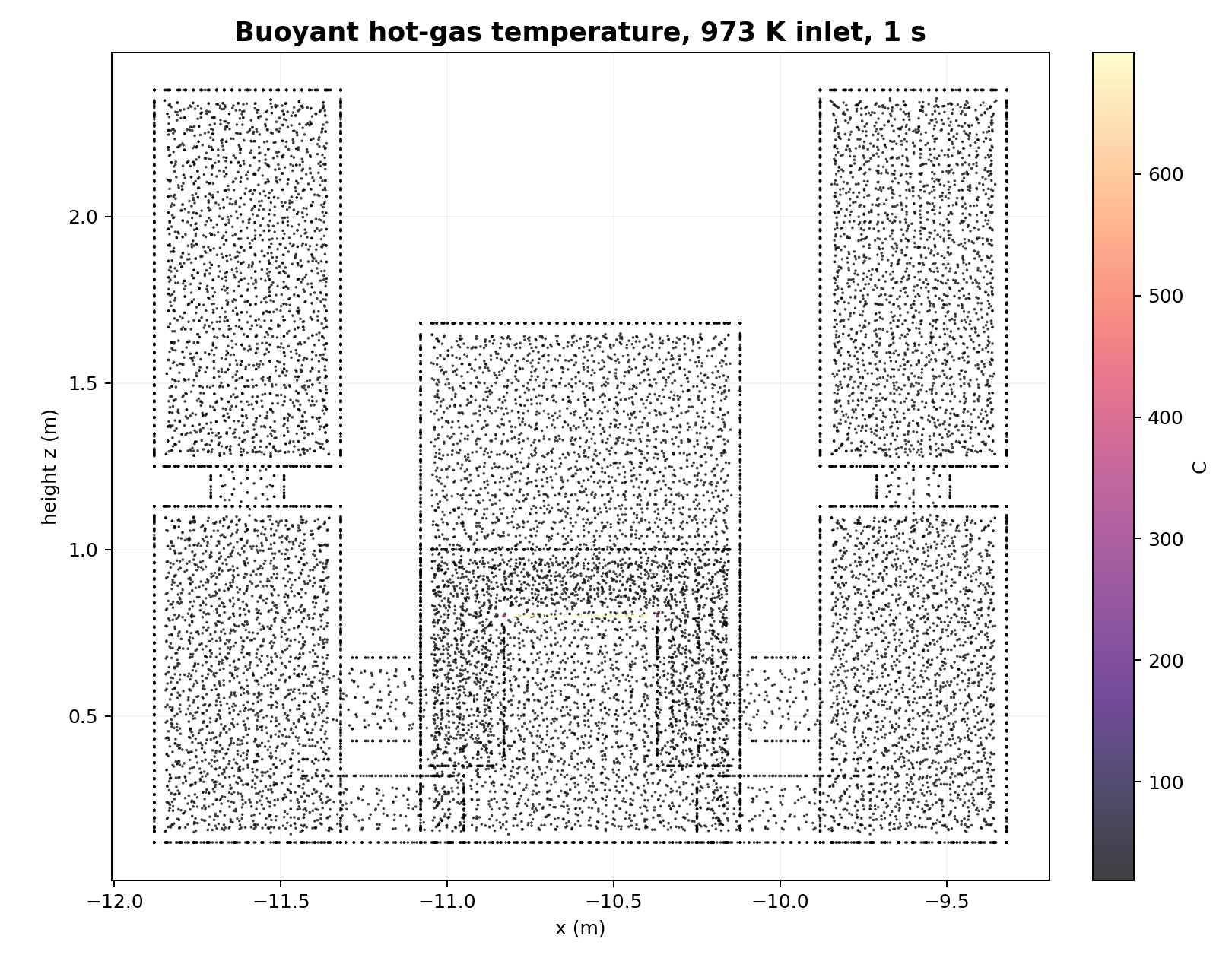
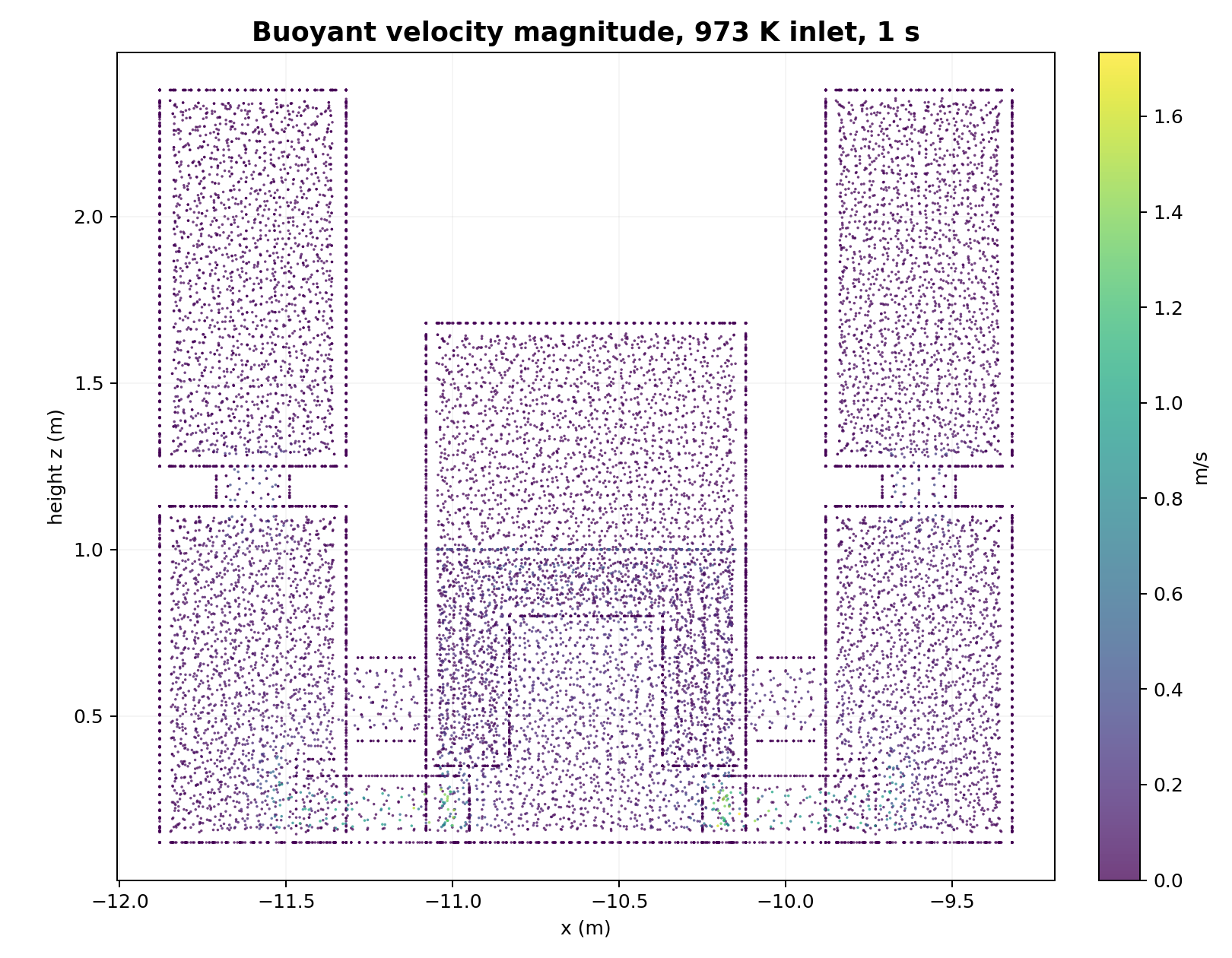
stableopen hot-gas gravity caseBuoyant inlet
700 C973 K target caseBuoyant p98 speed
0.34 m/s1 s startup passBuoyant L/R delta
1.6%very balancedRun time
1.0 sstable gravity passBuoyant summary
Buoyant temperature
Buoyant velocity
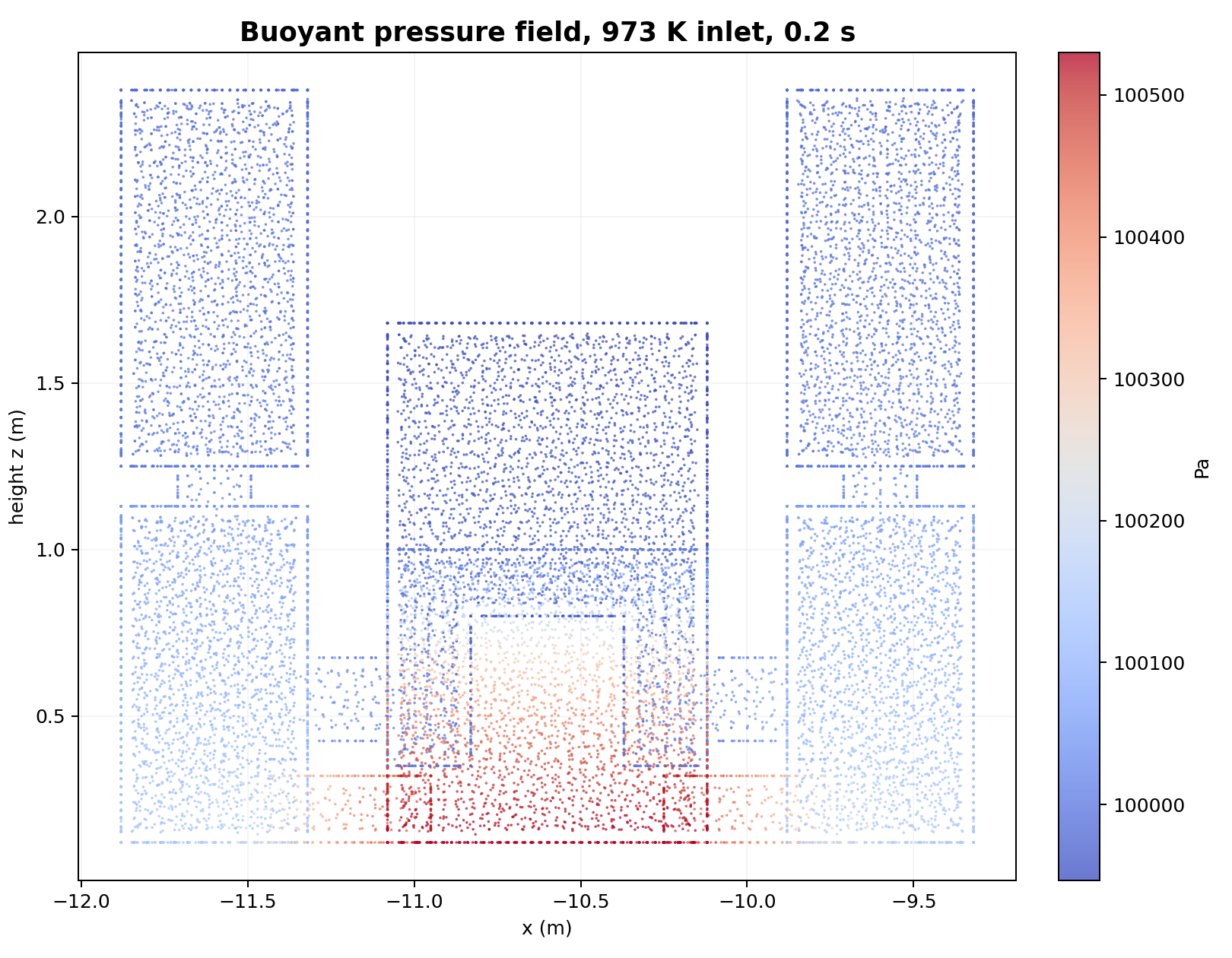
Buoyant pressure
Corrected CHT
stablemesh scaled mm to mRun time
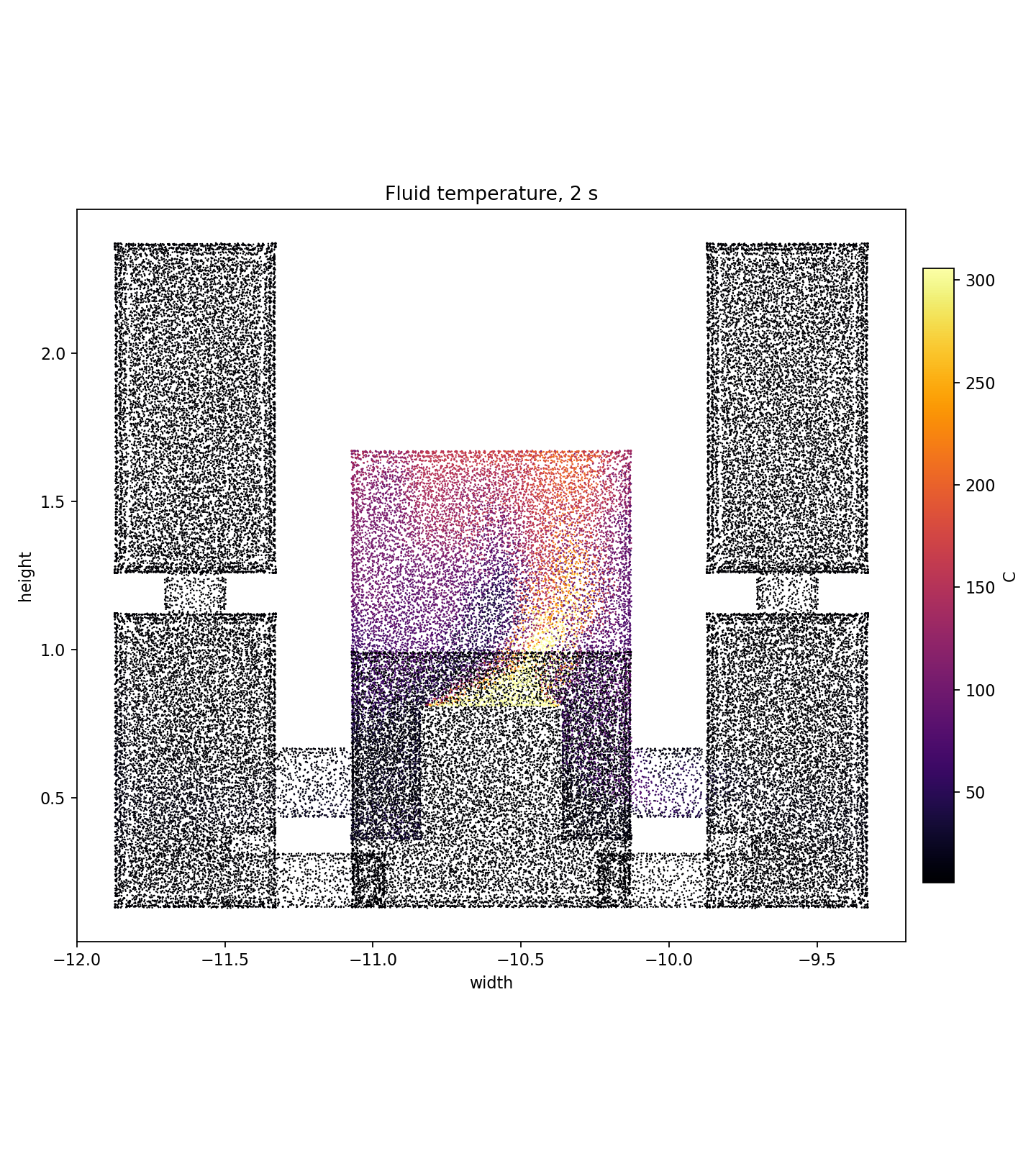
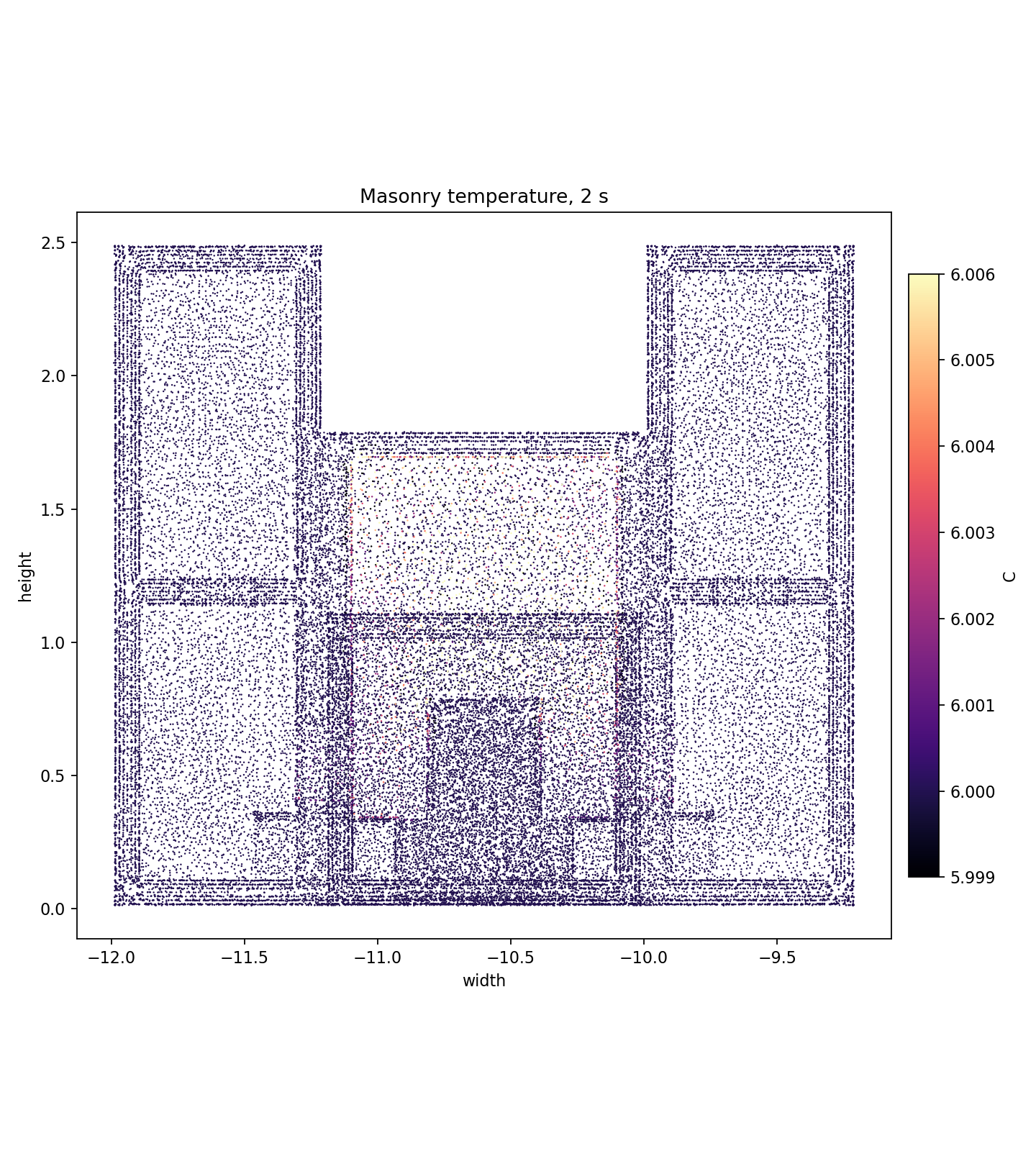
2.0 s600 C, Hoxter mass flowMass flow
0.03 kg/sHoxter storage valueGas max
600 Chot inlet reaches cellsP98 speed
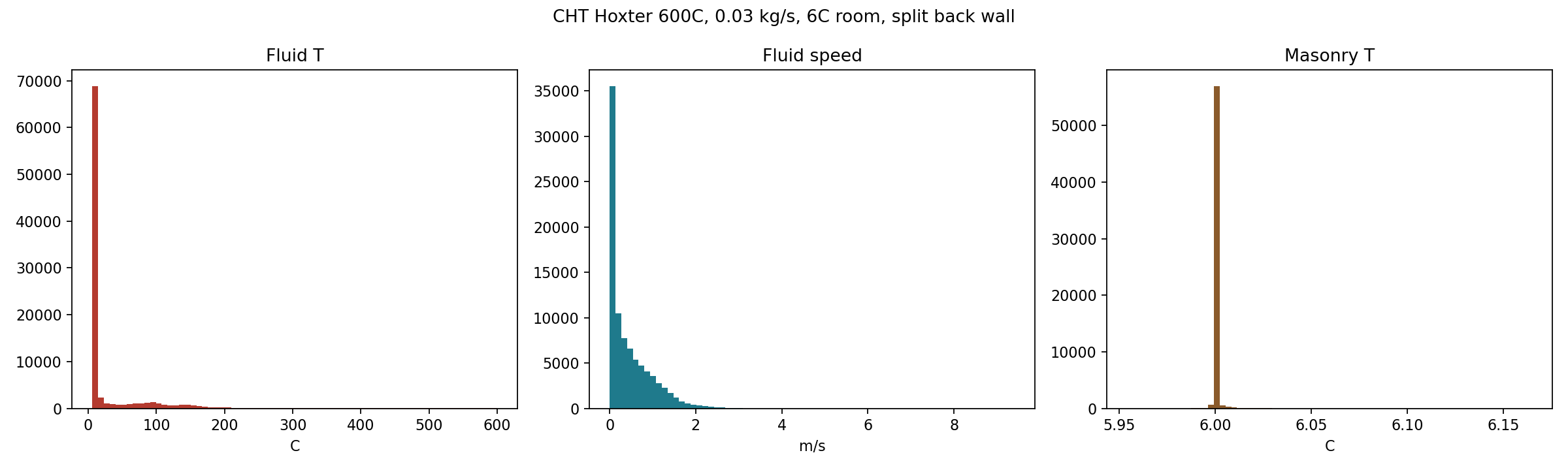
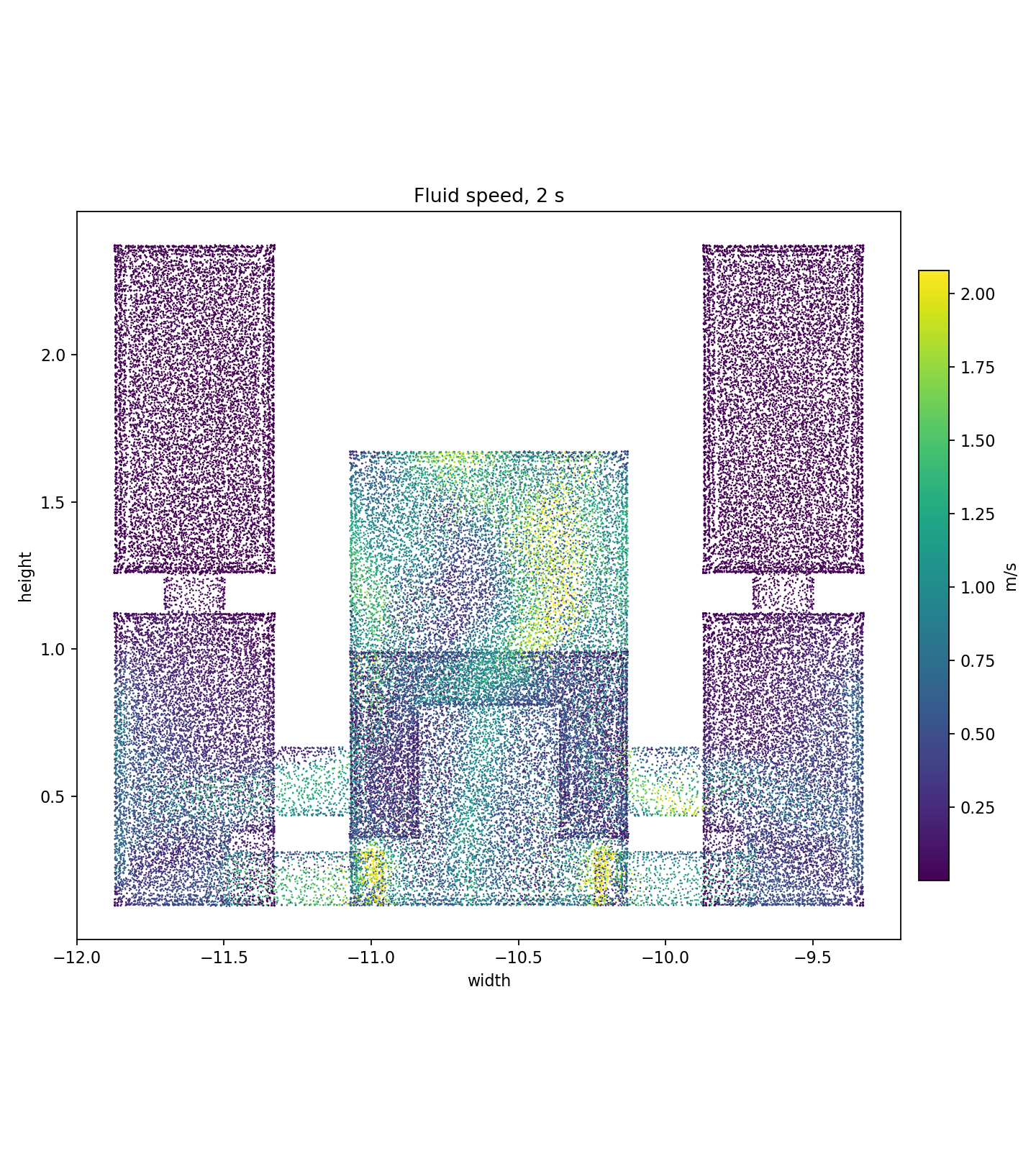
1.79 m/scorrected scale resultCorrected CHT summary
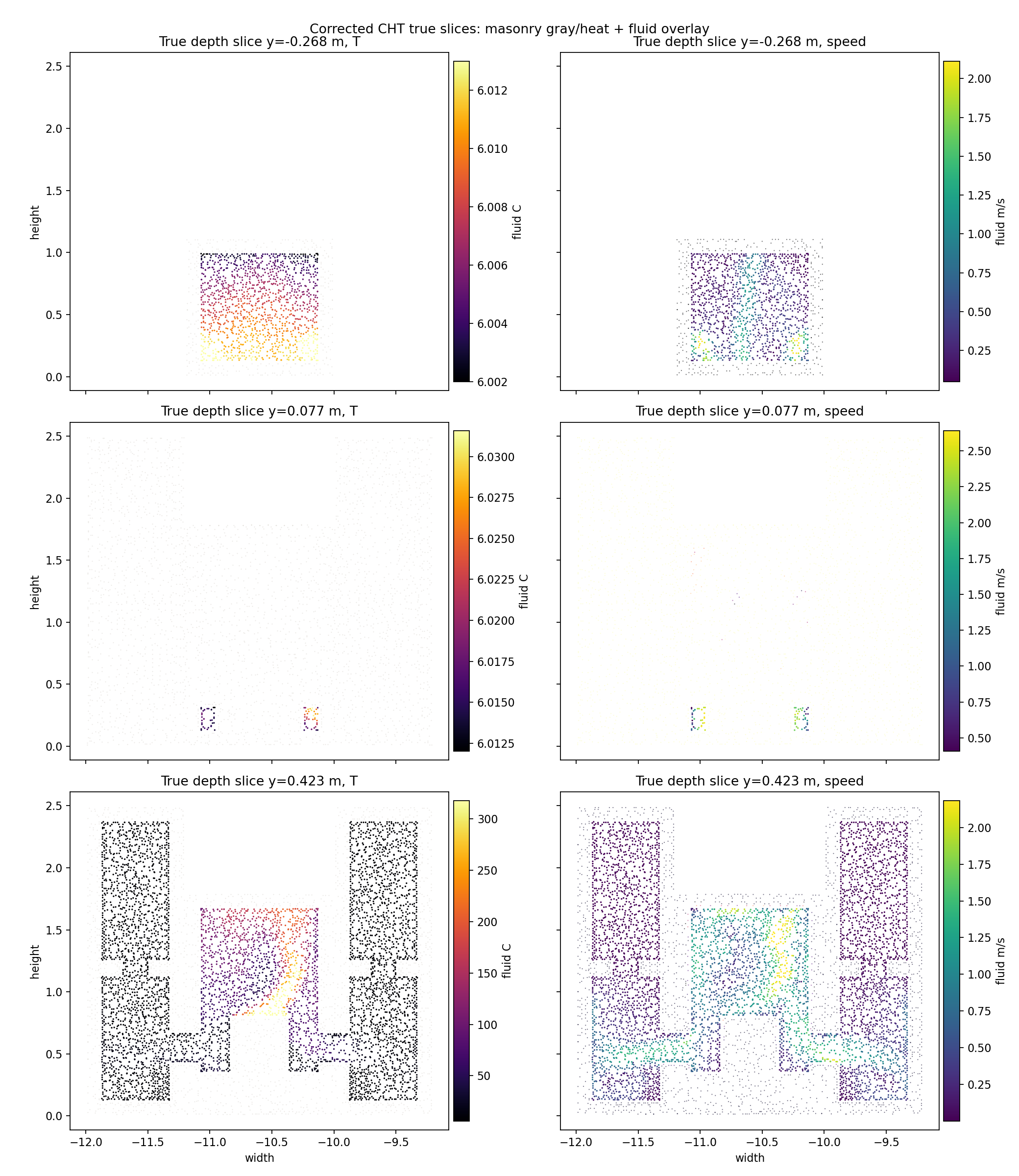
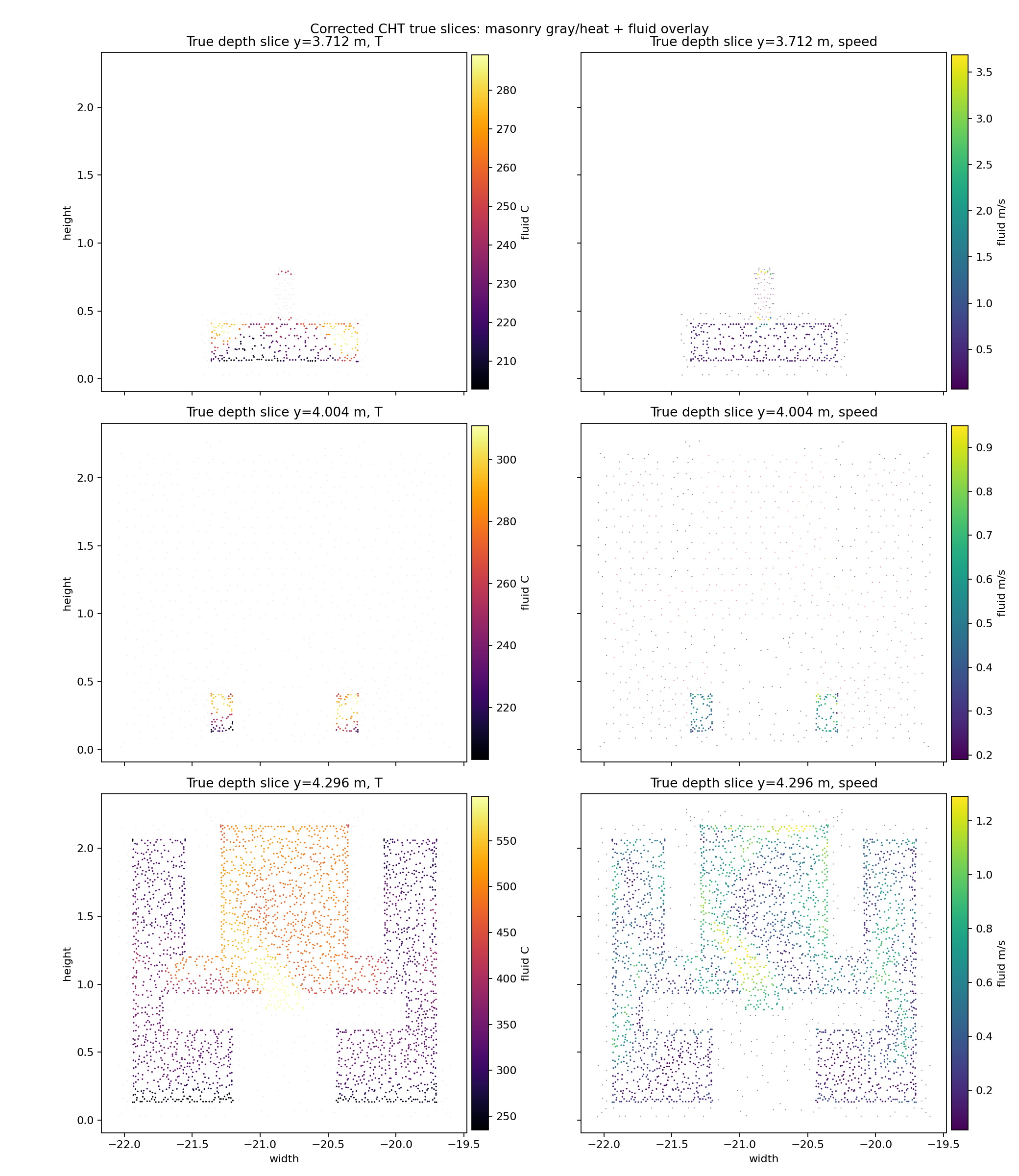
True depth slices
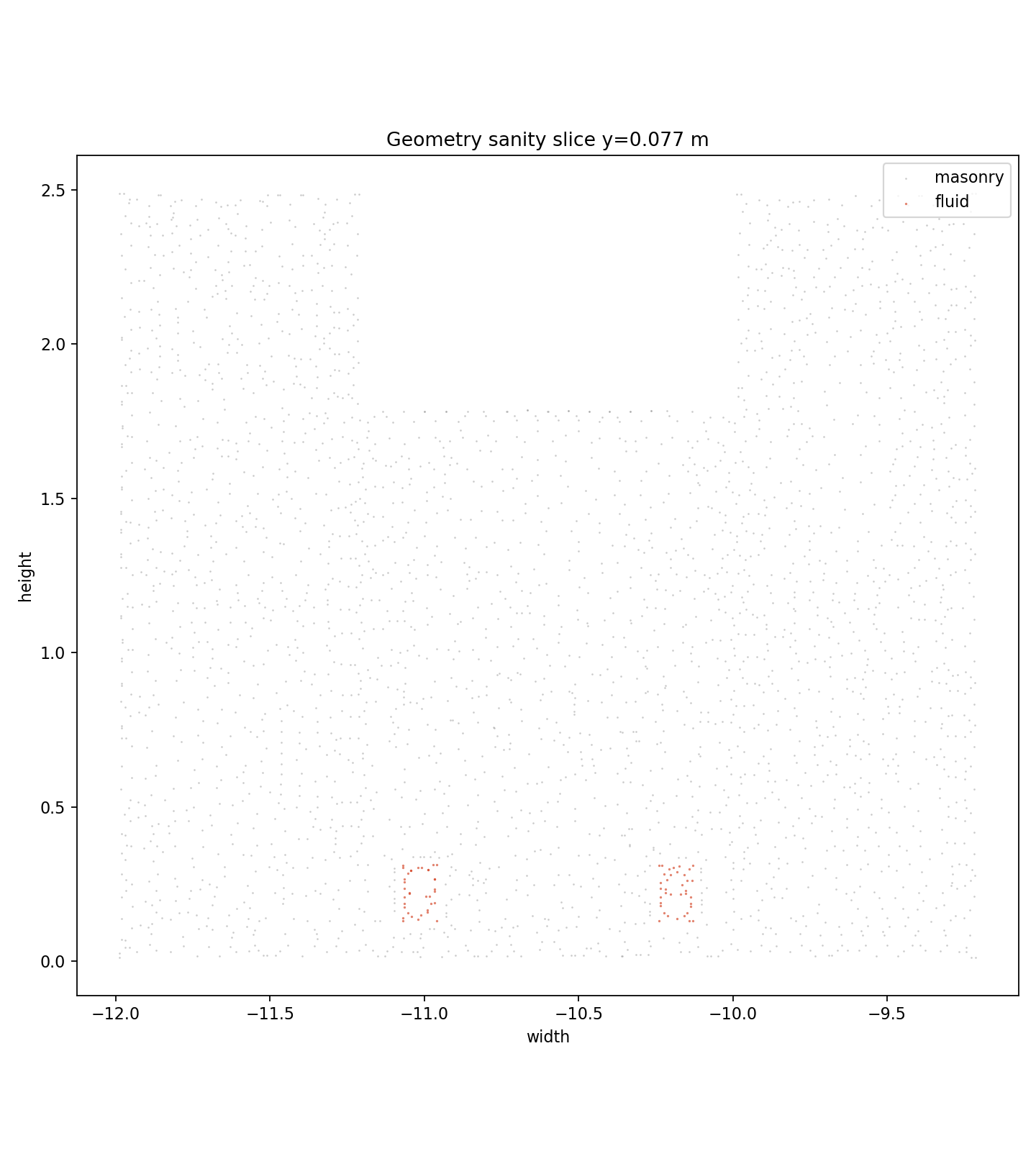
Geometry sanity slice
Corrected fluid temperature
Corrected masonry temperature
Corrected fluid velocity
New bell design
stablefirst Shapr redesign runRun time
7200 s14 h 55 min computeOutlet temp
365 C2h ultra-preview resultGas mean
444 Ctoo much hot gas remainsMasonry max
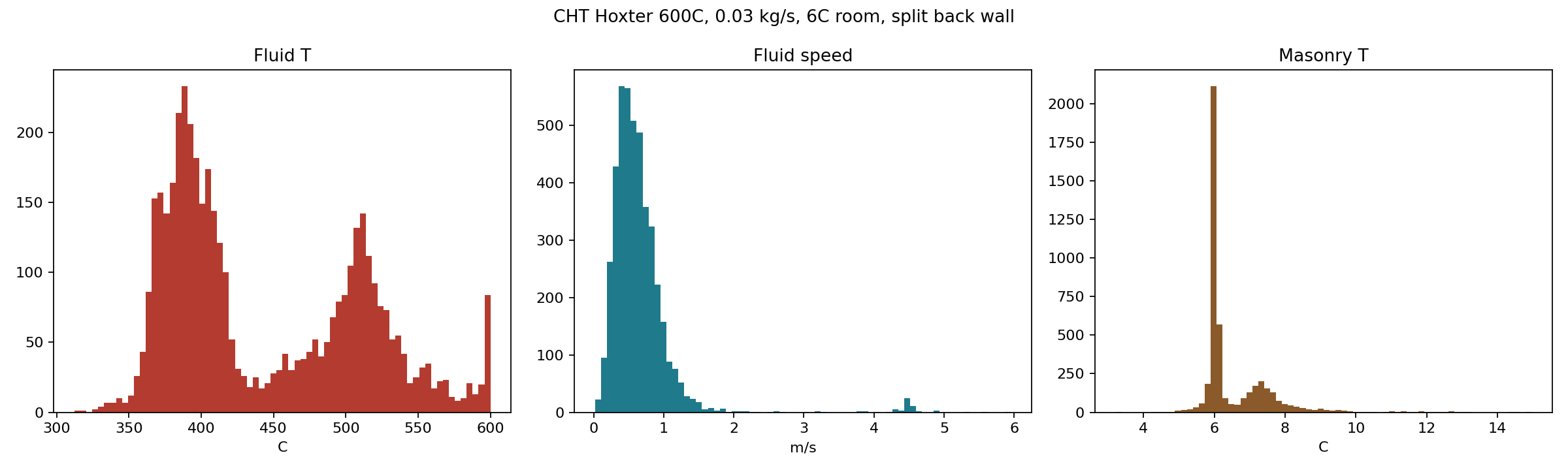
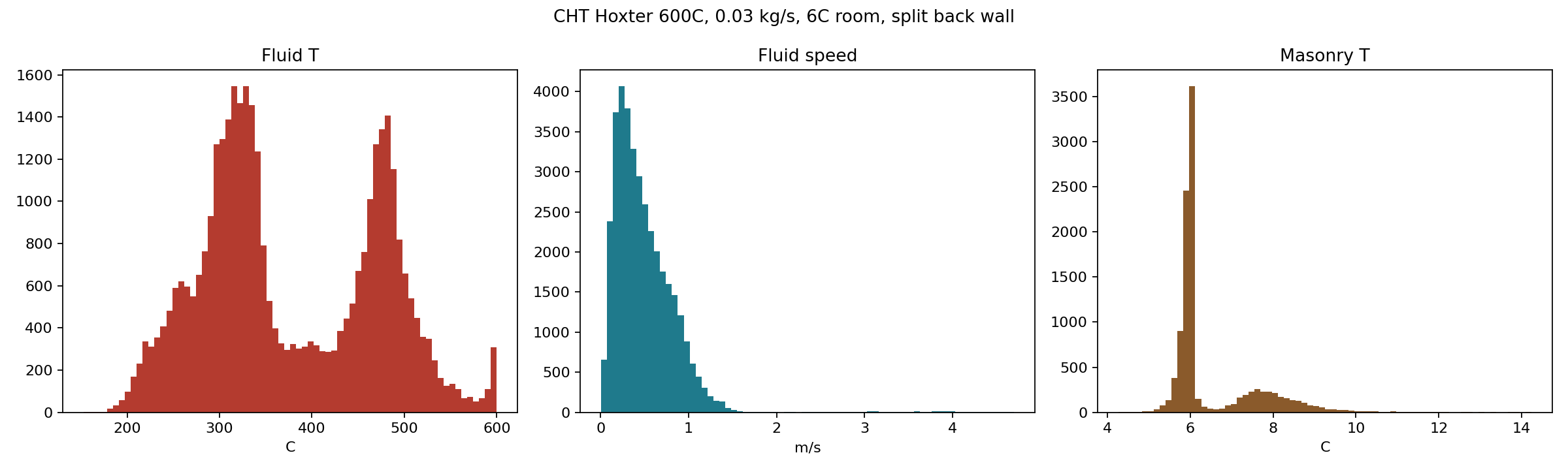
15.0 Cweak storage uptakeNew bell 2h time series
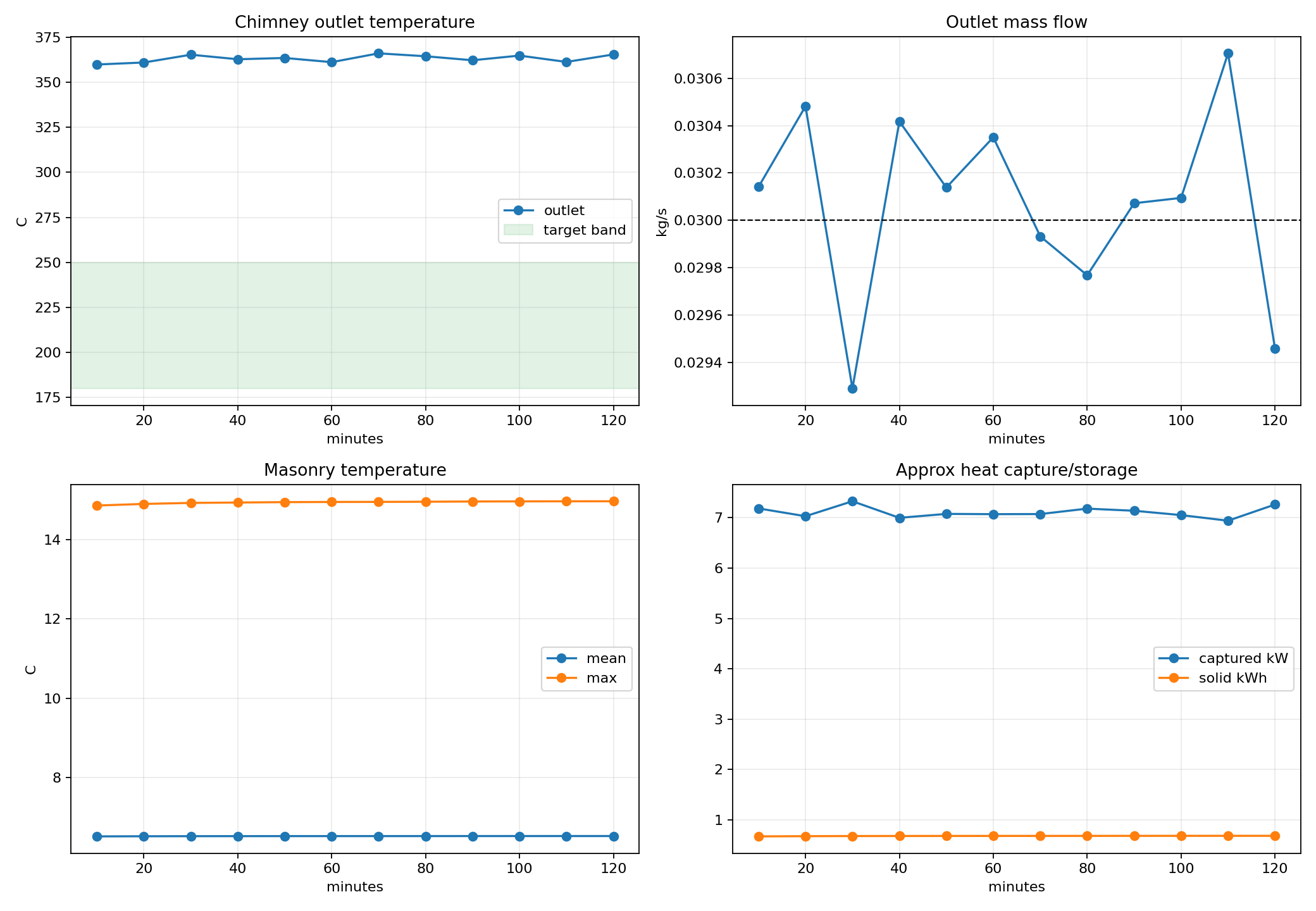
New bell 2h summary
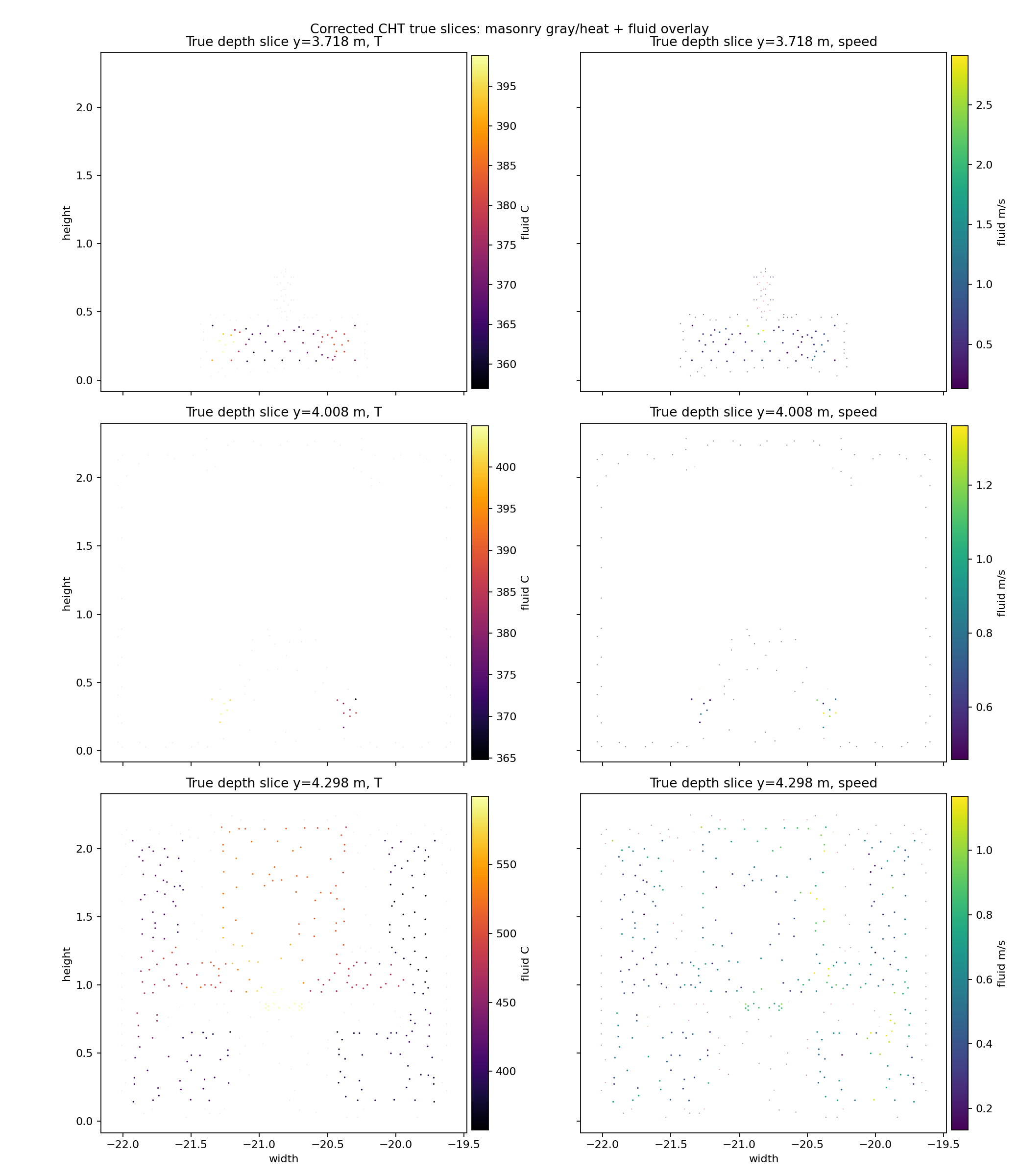
New bell 2h true slices
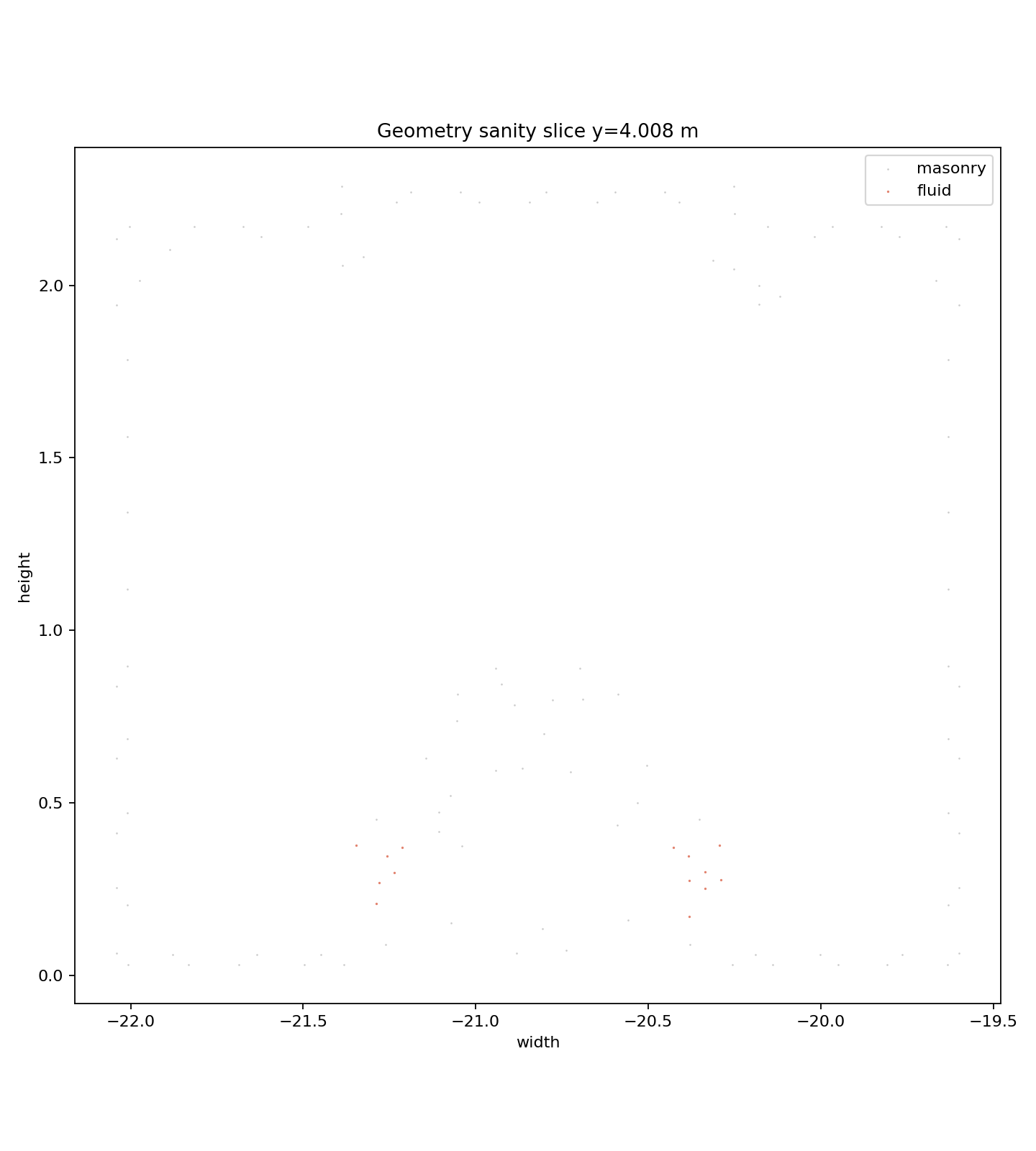
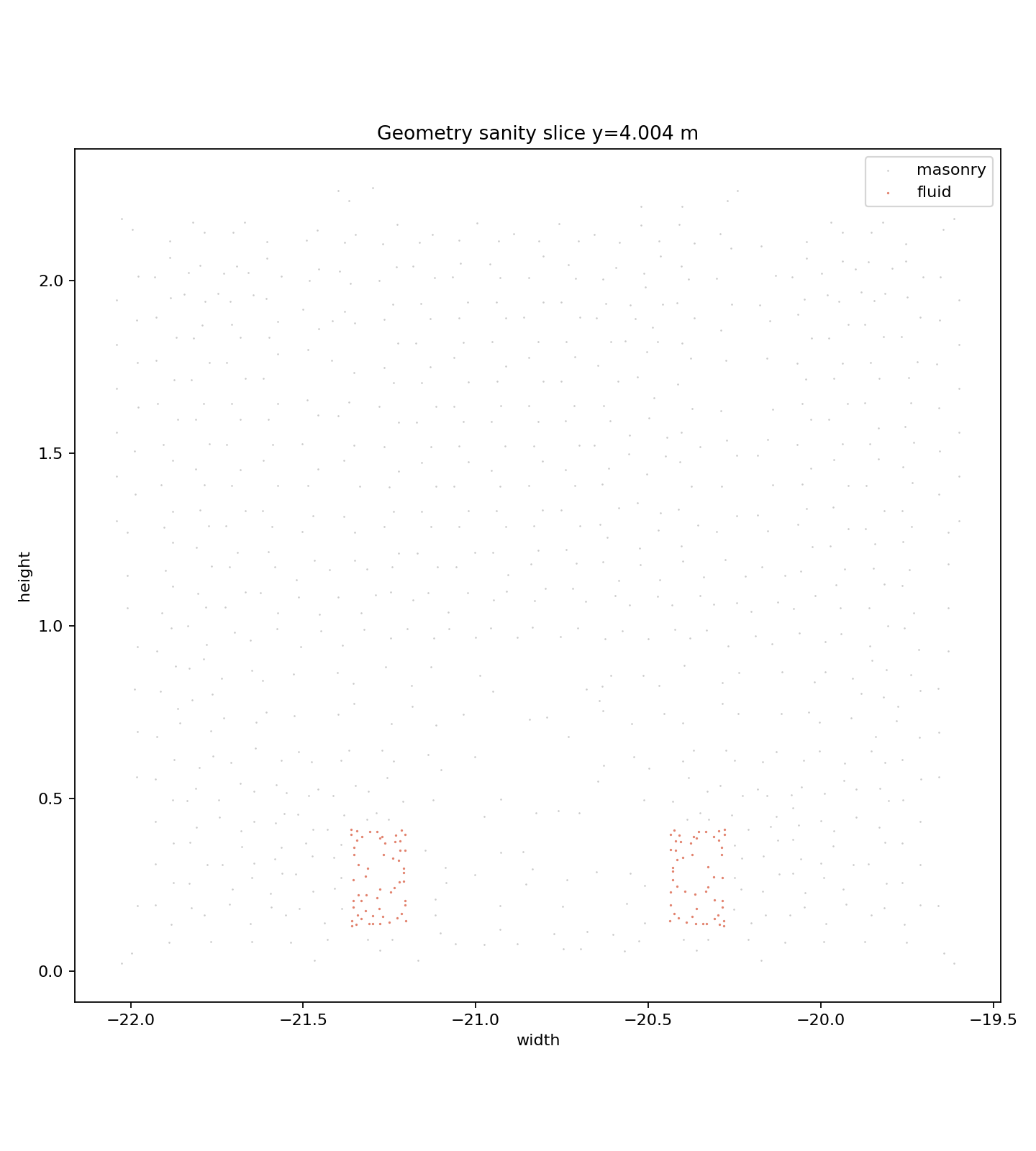
New bell 2h geometry check
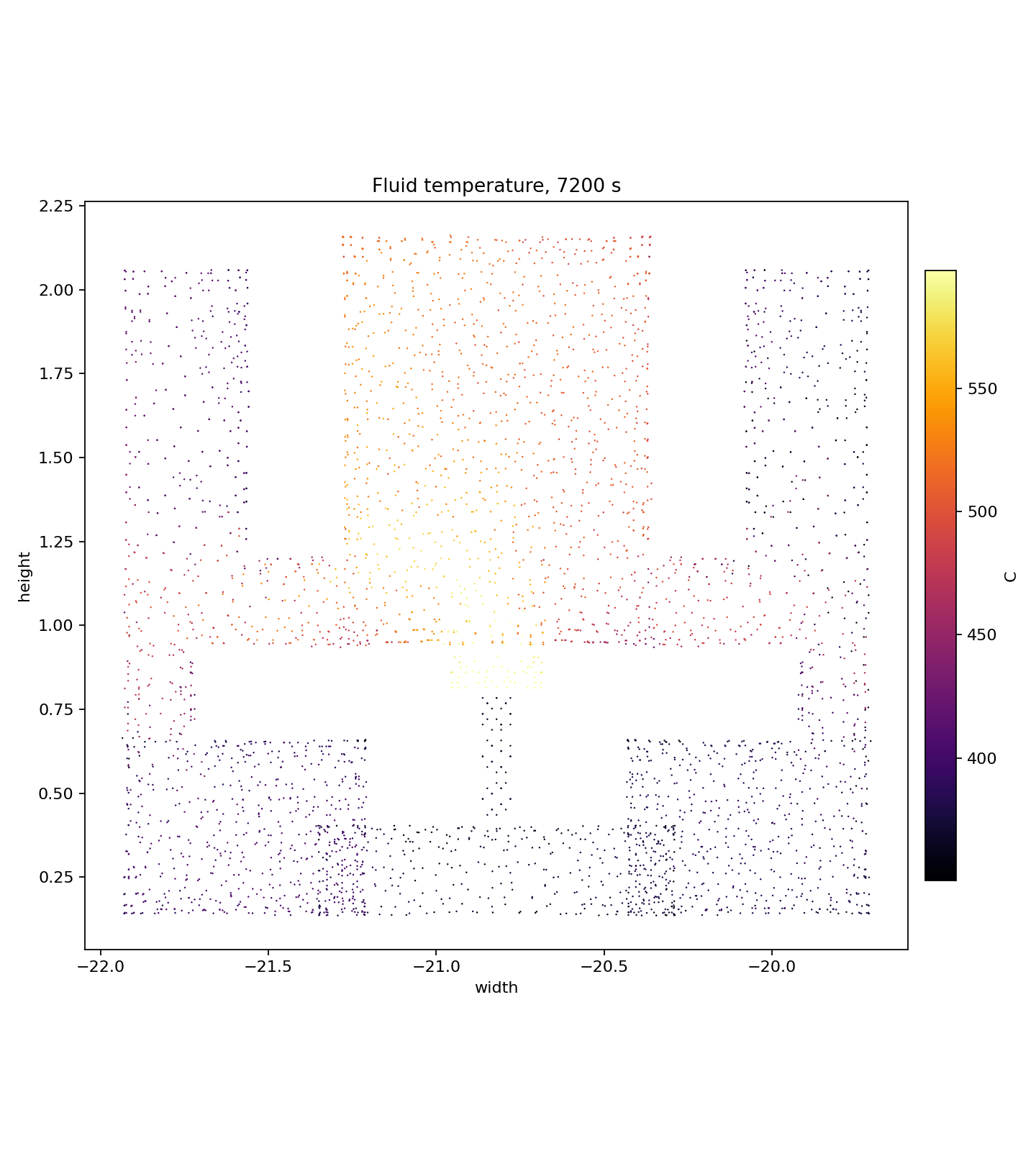
New bell 2h fluid temperature
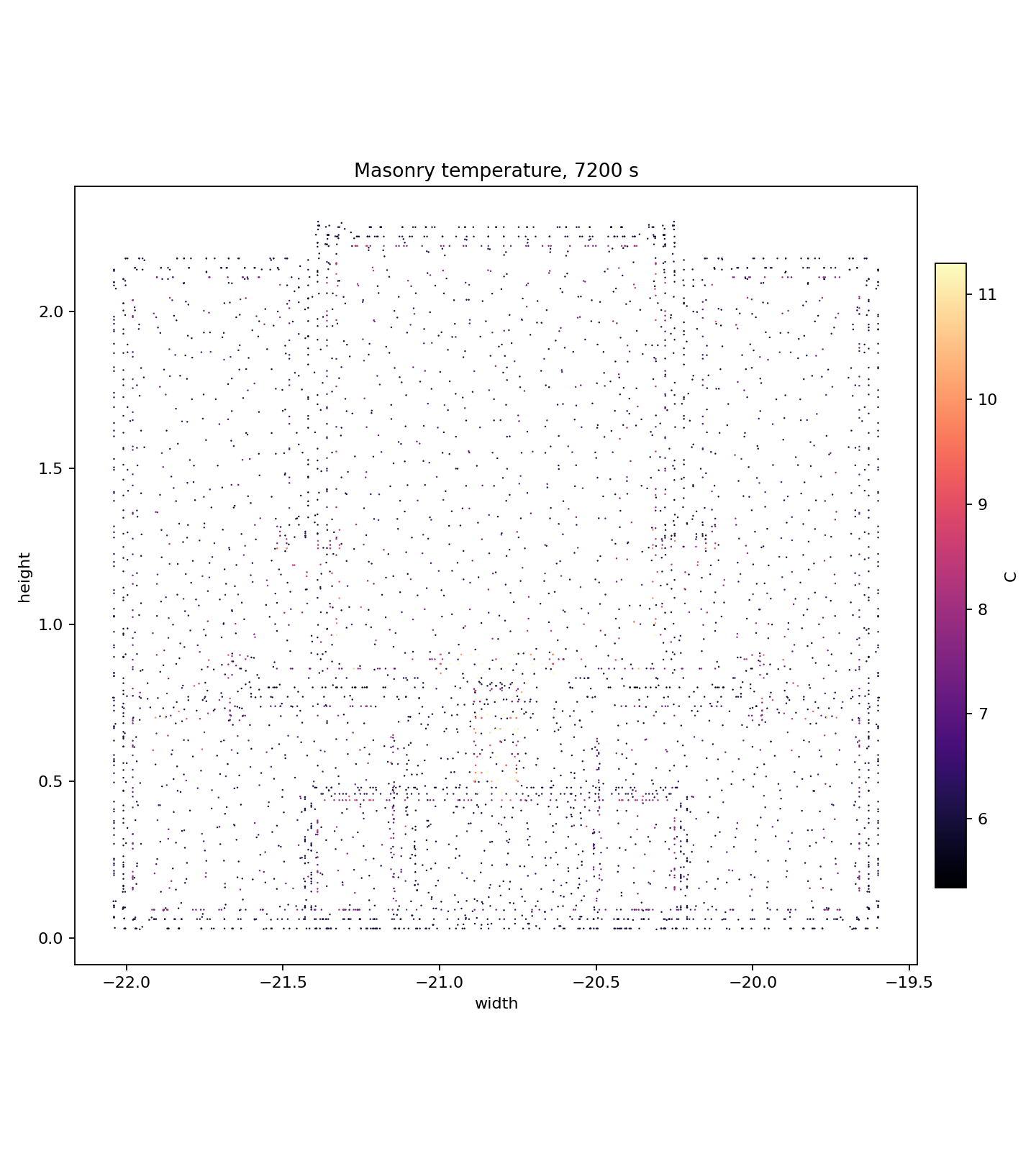
New bell 2h masonry temperature
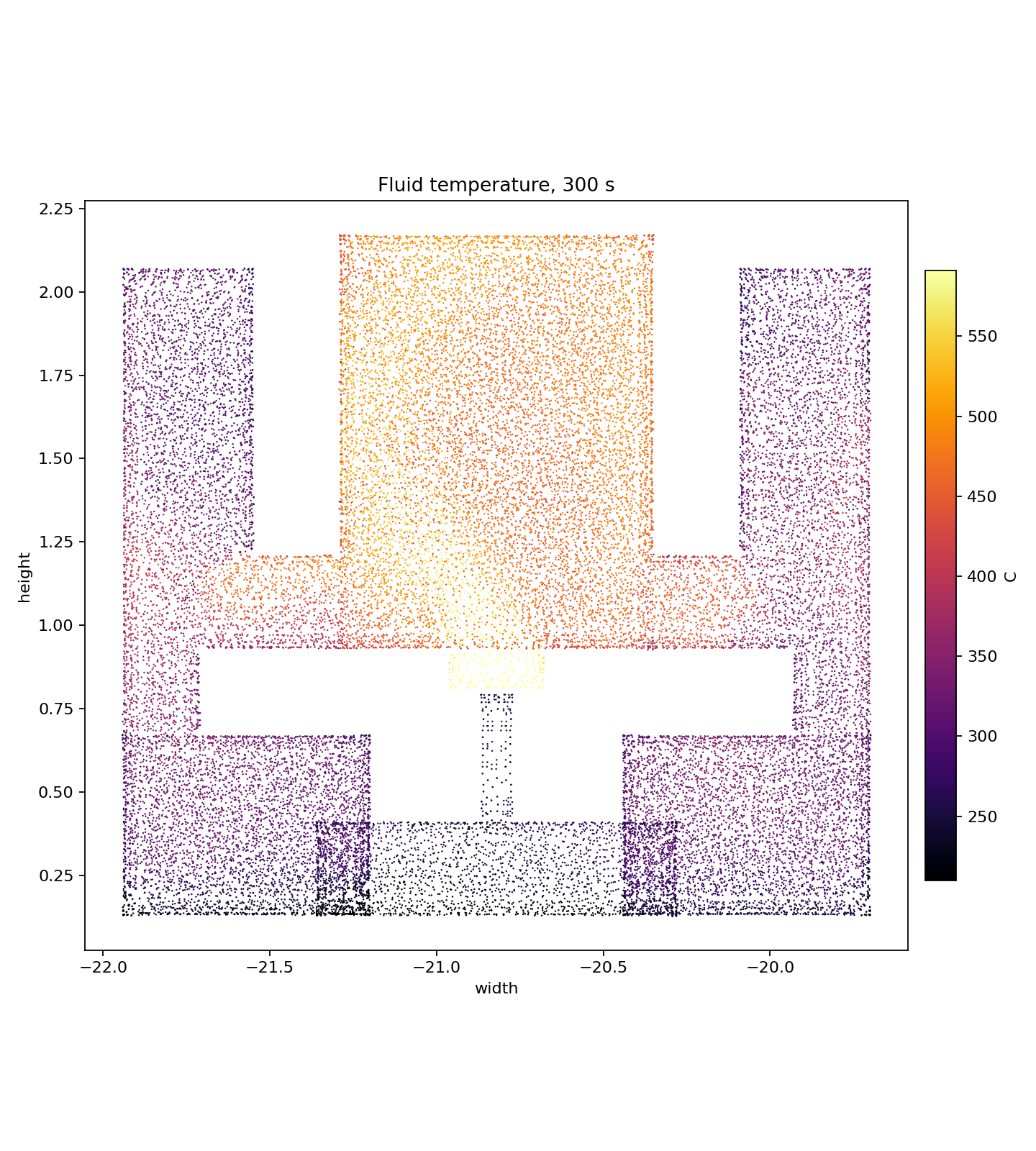
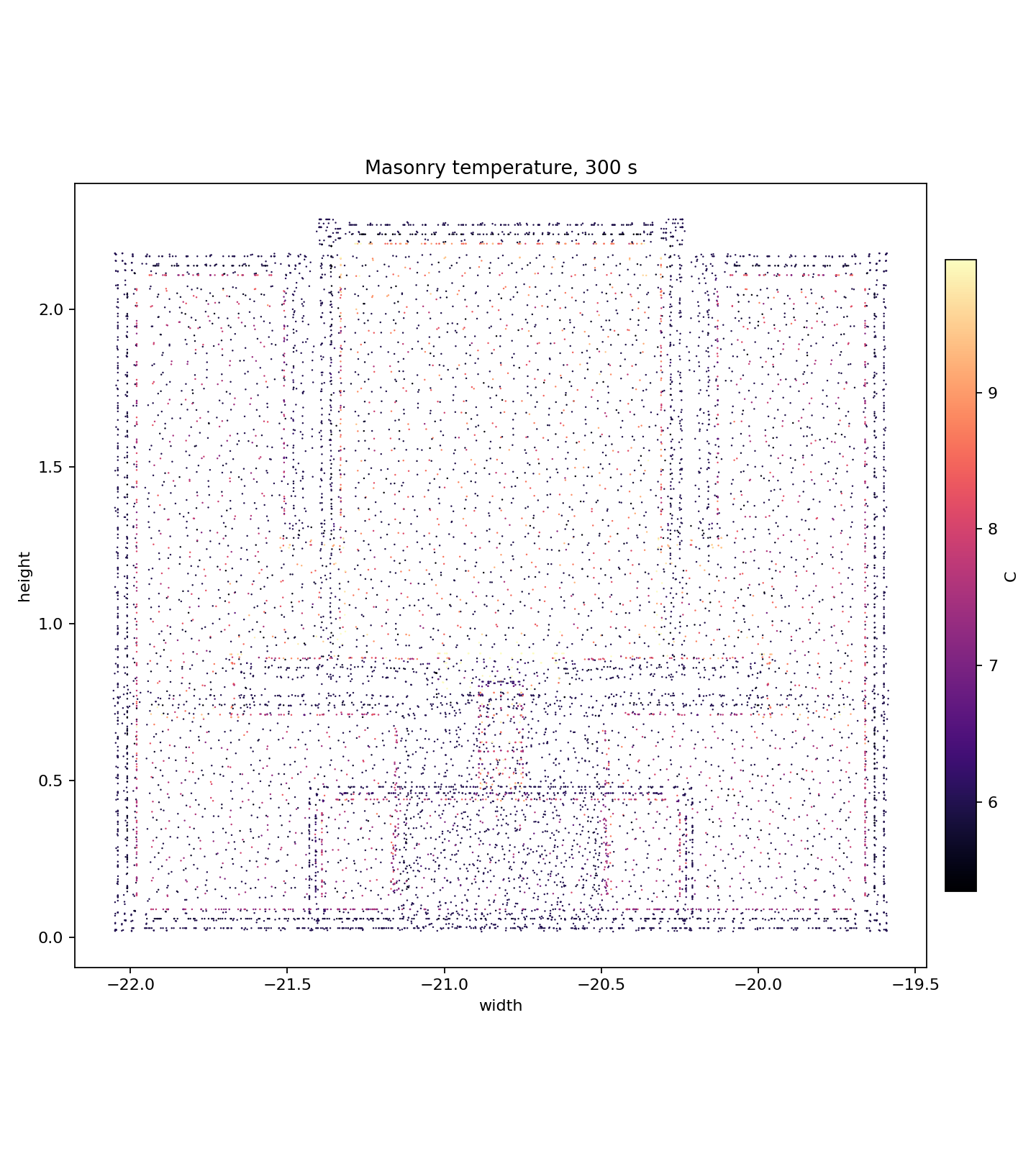
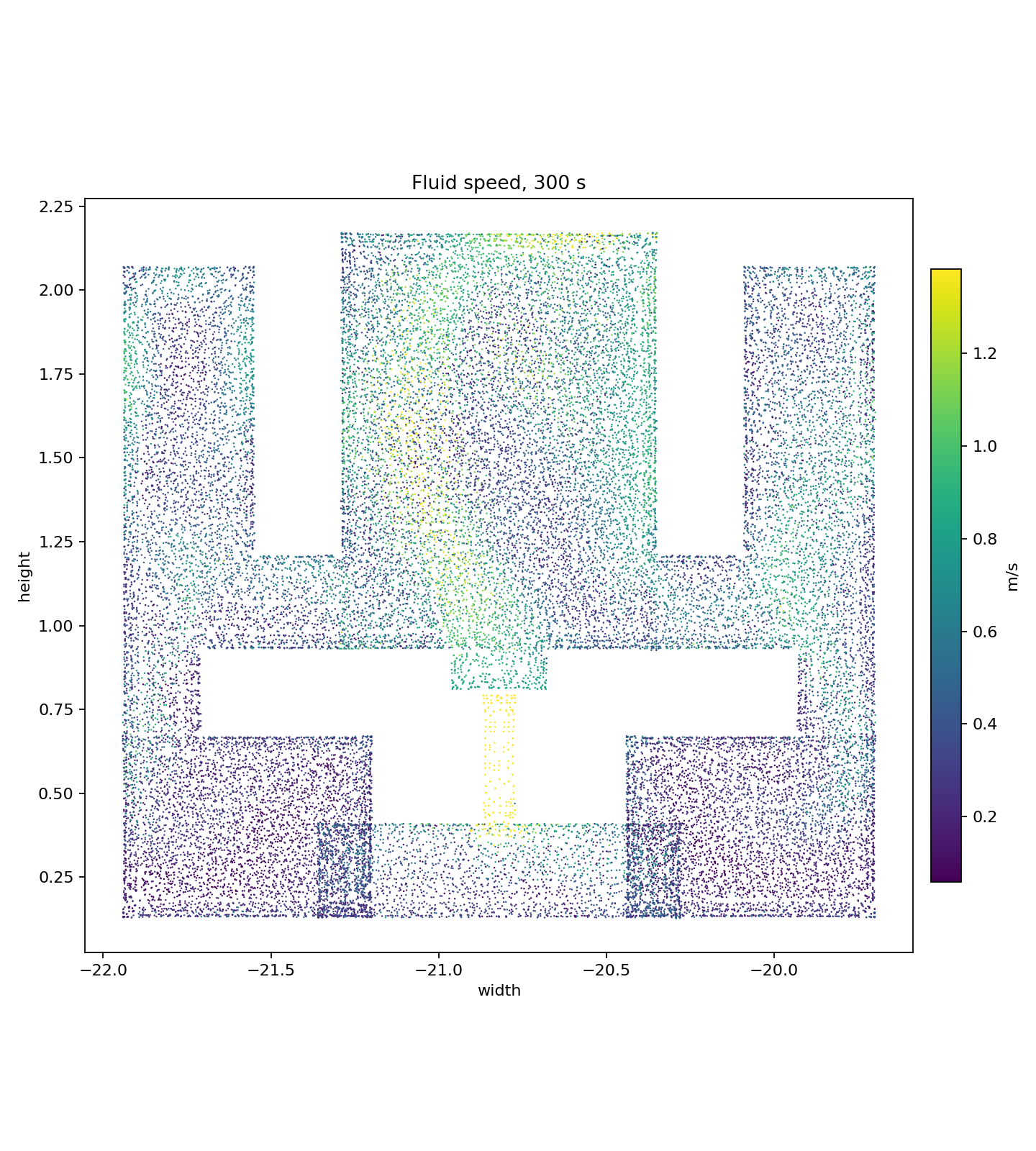
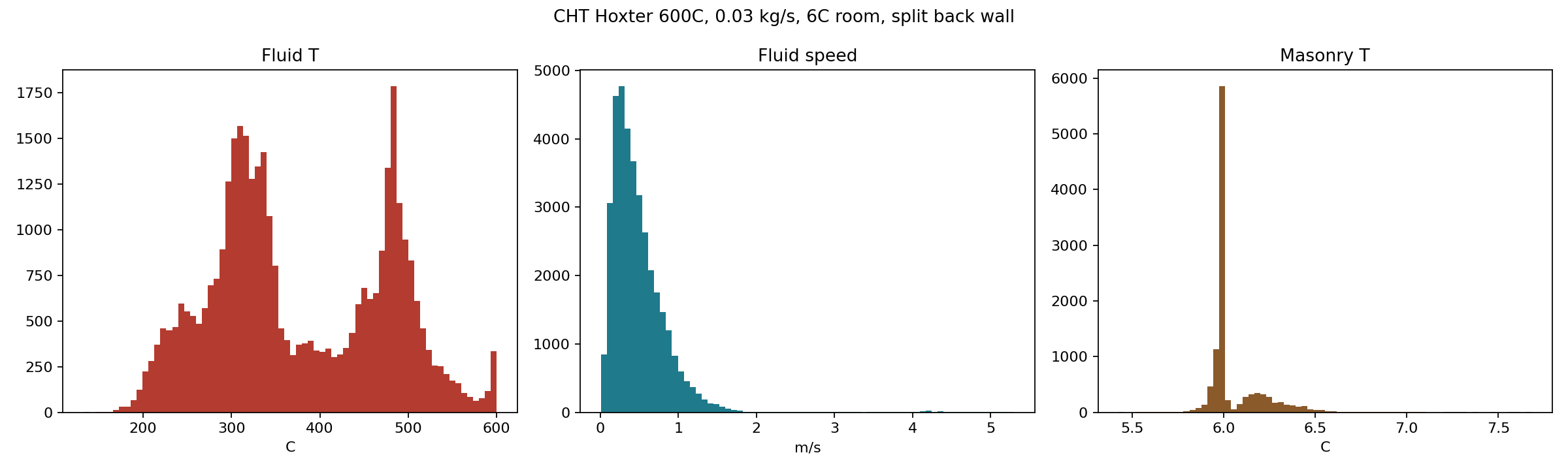
New bell 300 s summary
New bell 300 s true slices
New bell 300 s geometry check
New bell 300 s fluid temperature
New bell 300 s masonry temperature
New bell 300 s fluid velocity
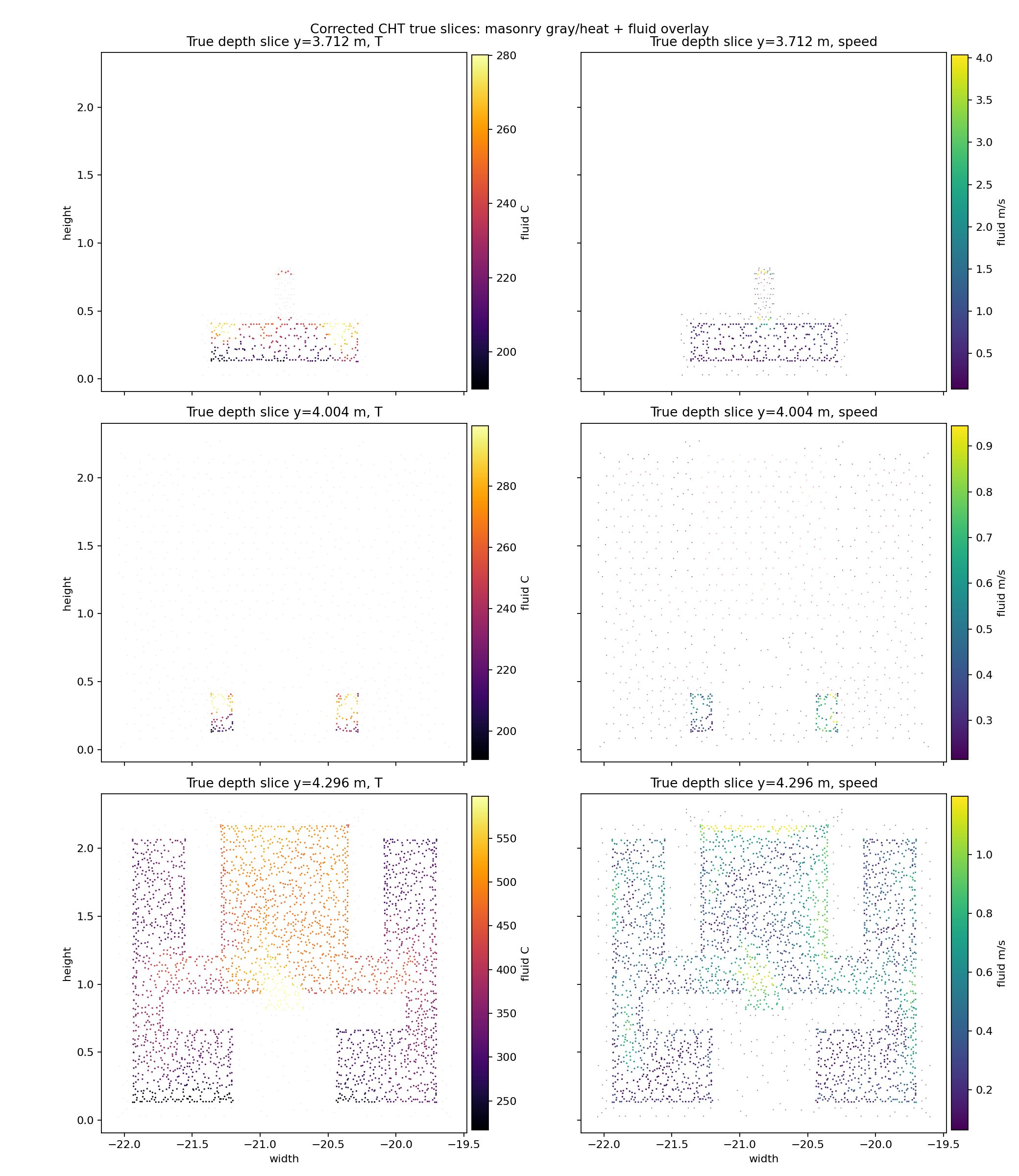
New bell 30 s summary
New bell 30 s true slices
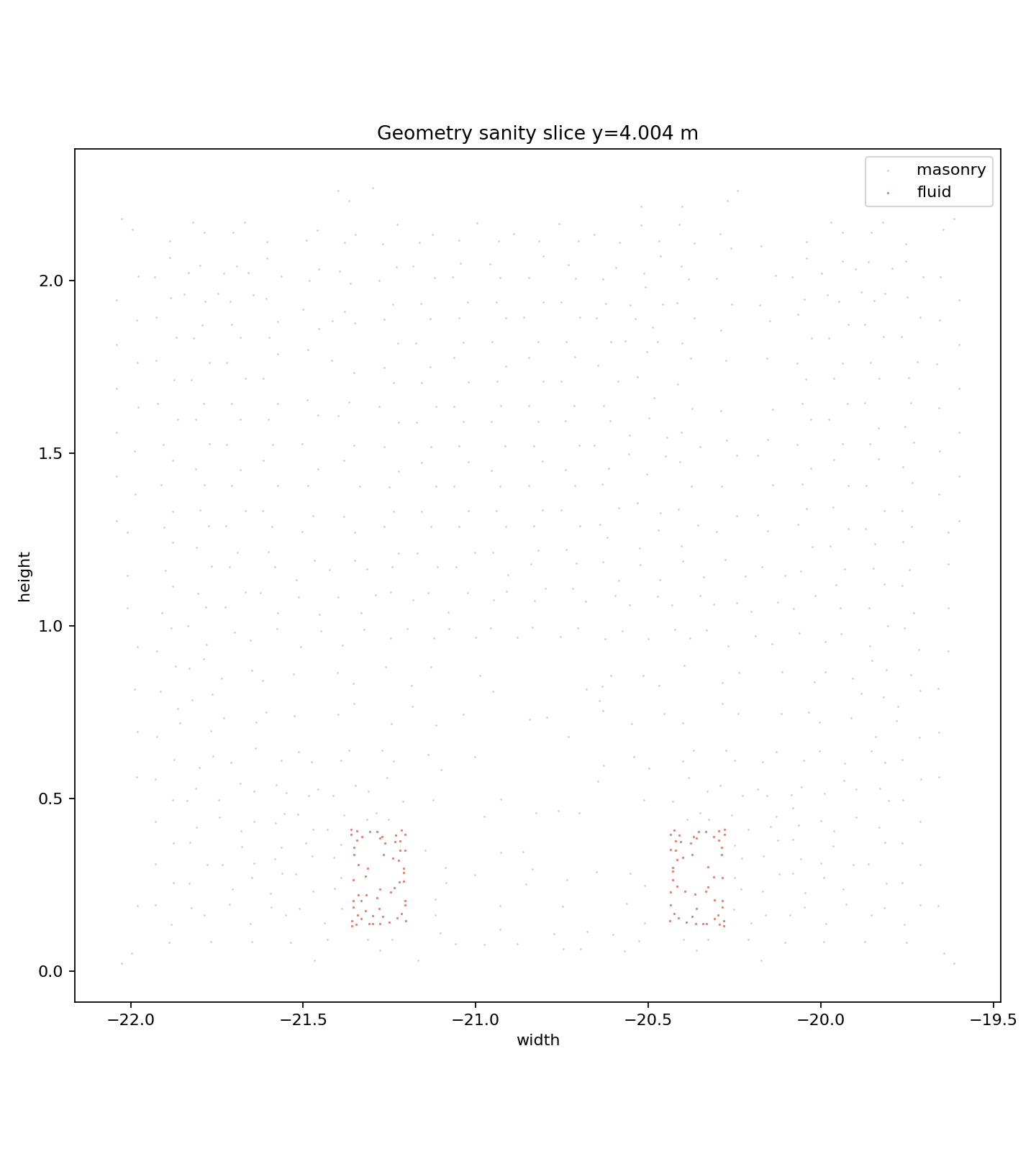
New bell 30 s geometry check
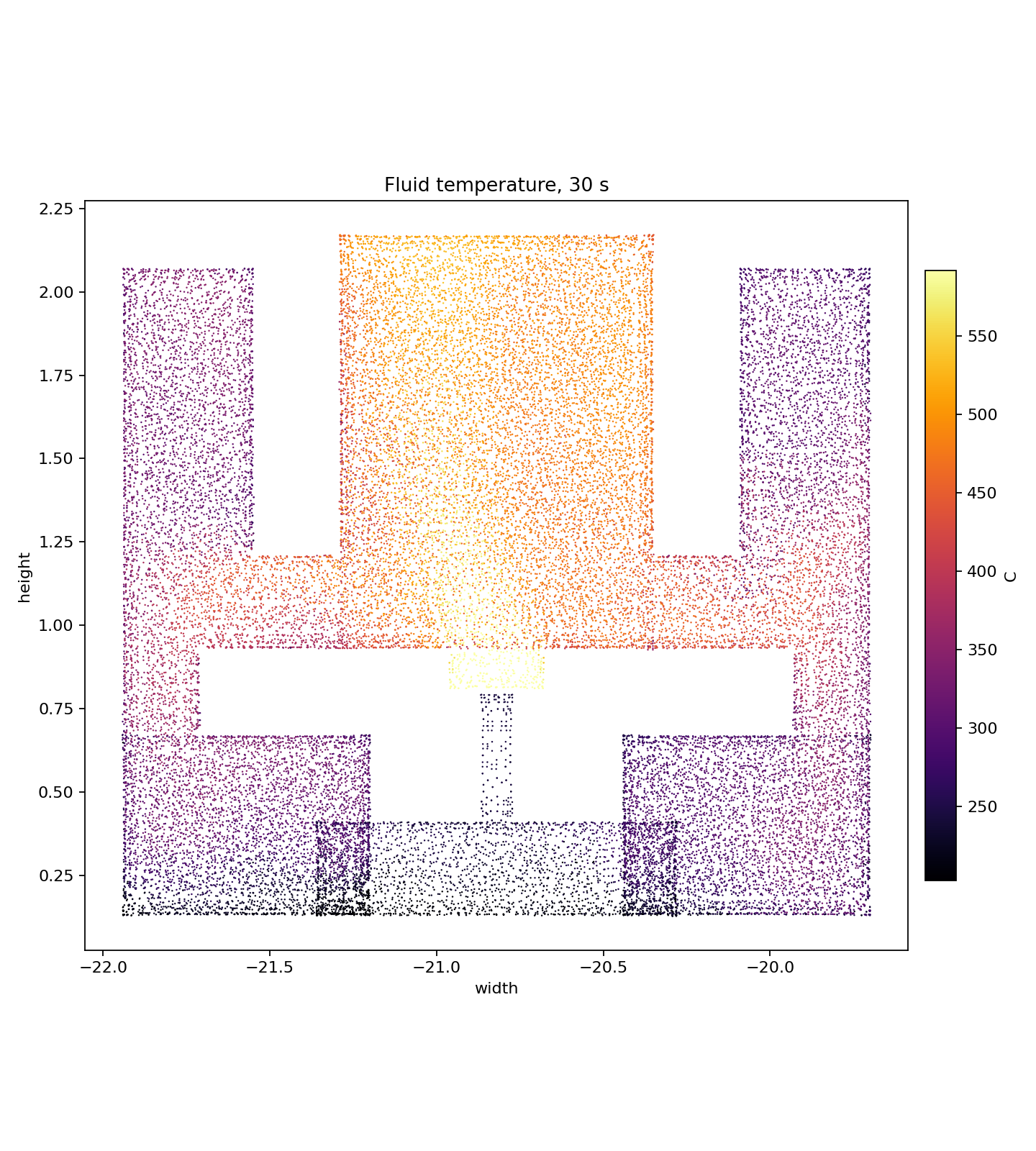
New bell 30 s fluid temperature
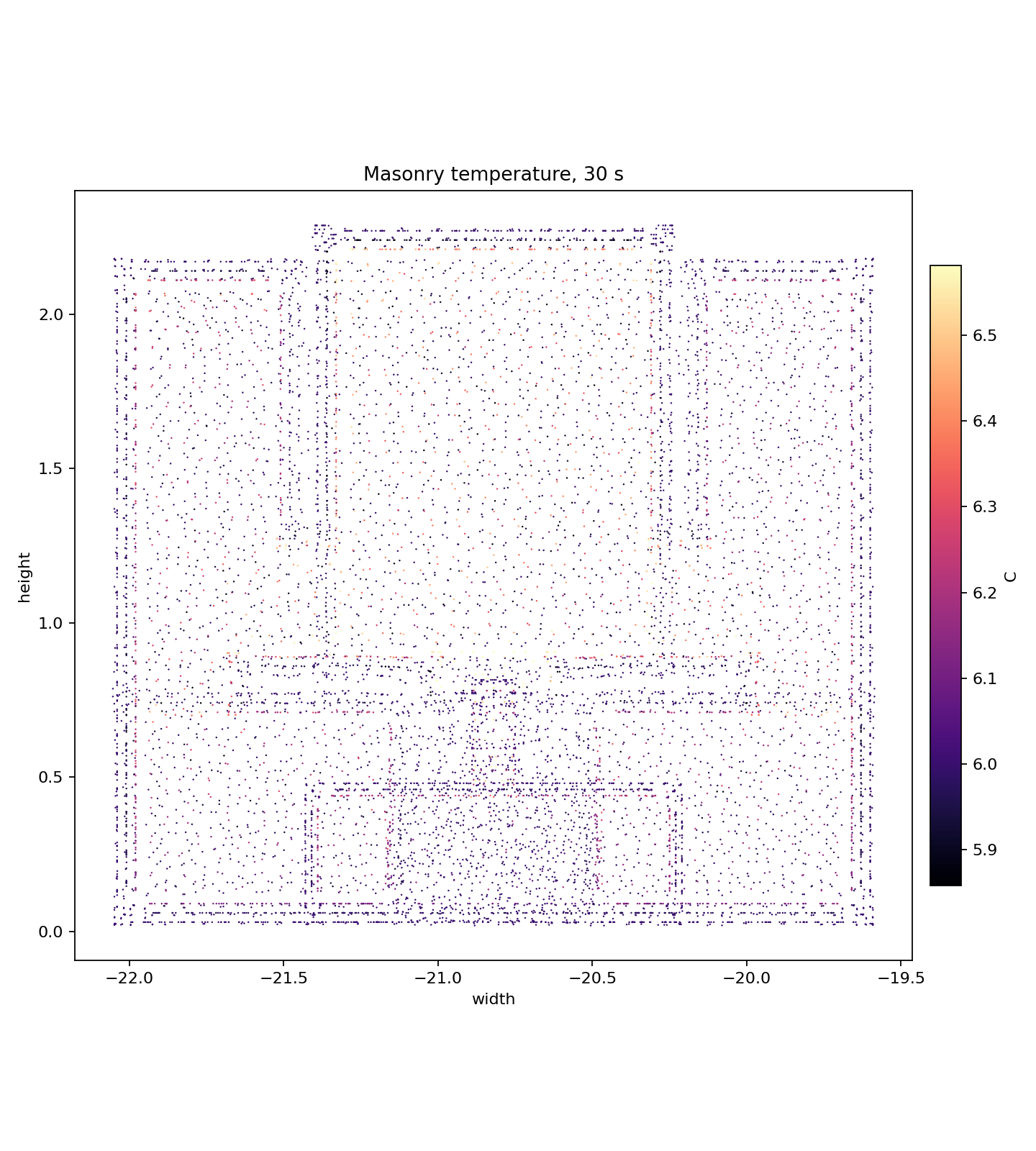
New bell 30 s masonry temperature
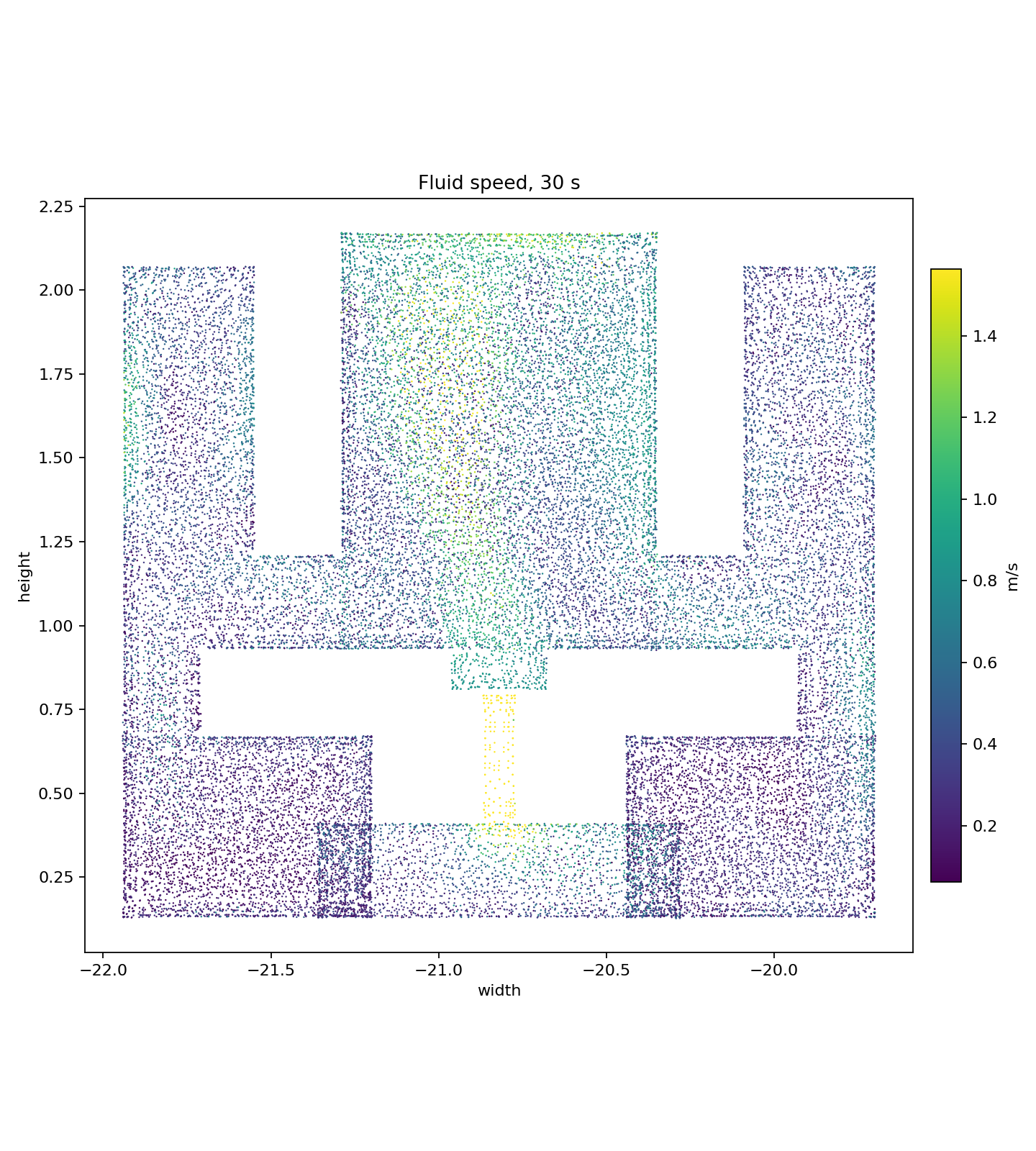
New bell 30 s fluid velocity
Ultra long CHT
stable2 h ultra-coarse previewRun time
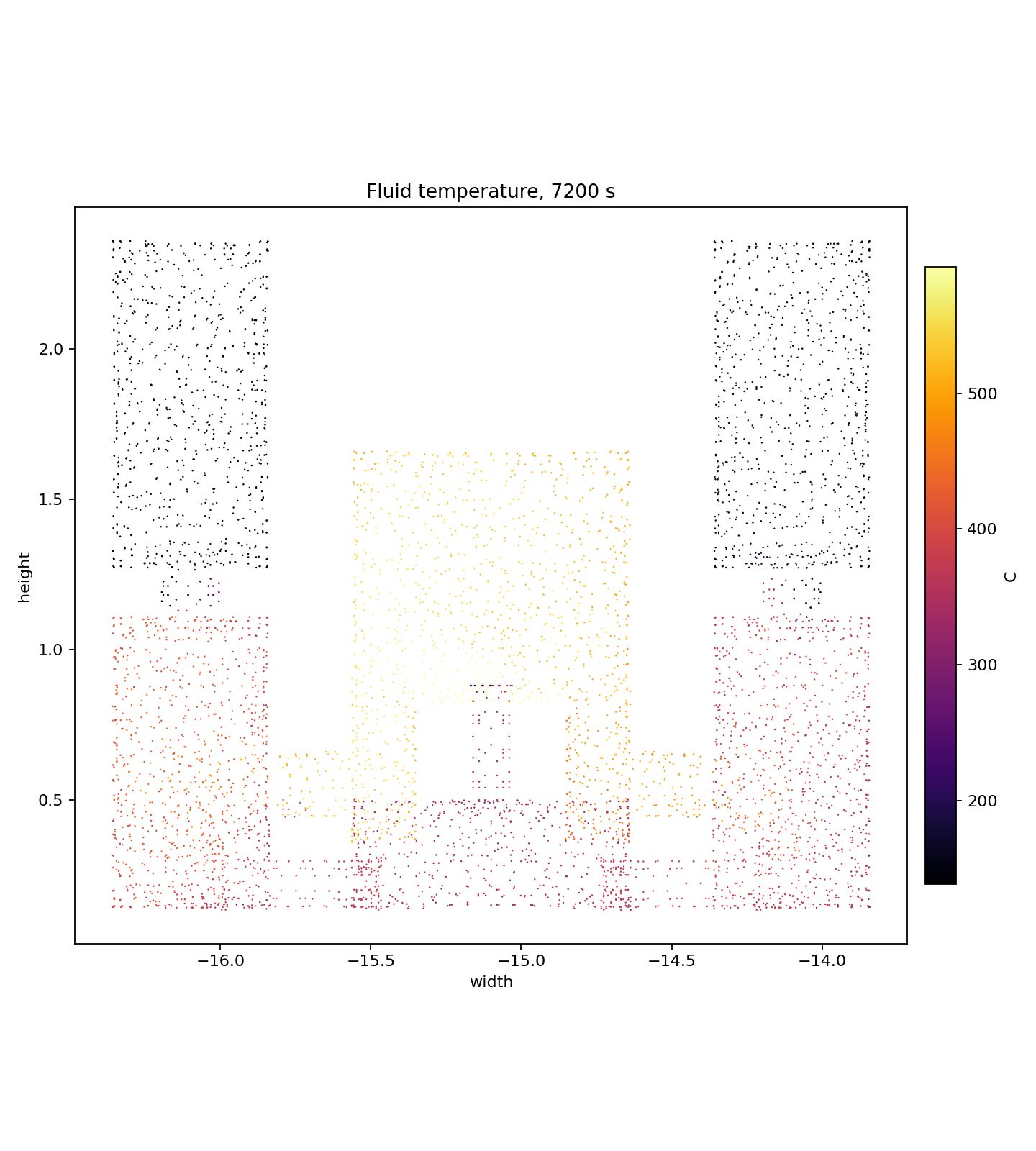
7200 s8 h 33 min computeOutlet temp
317 Cmass-weighted chimney exitGas mean
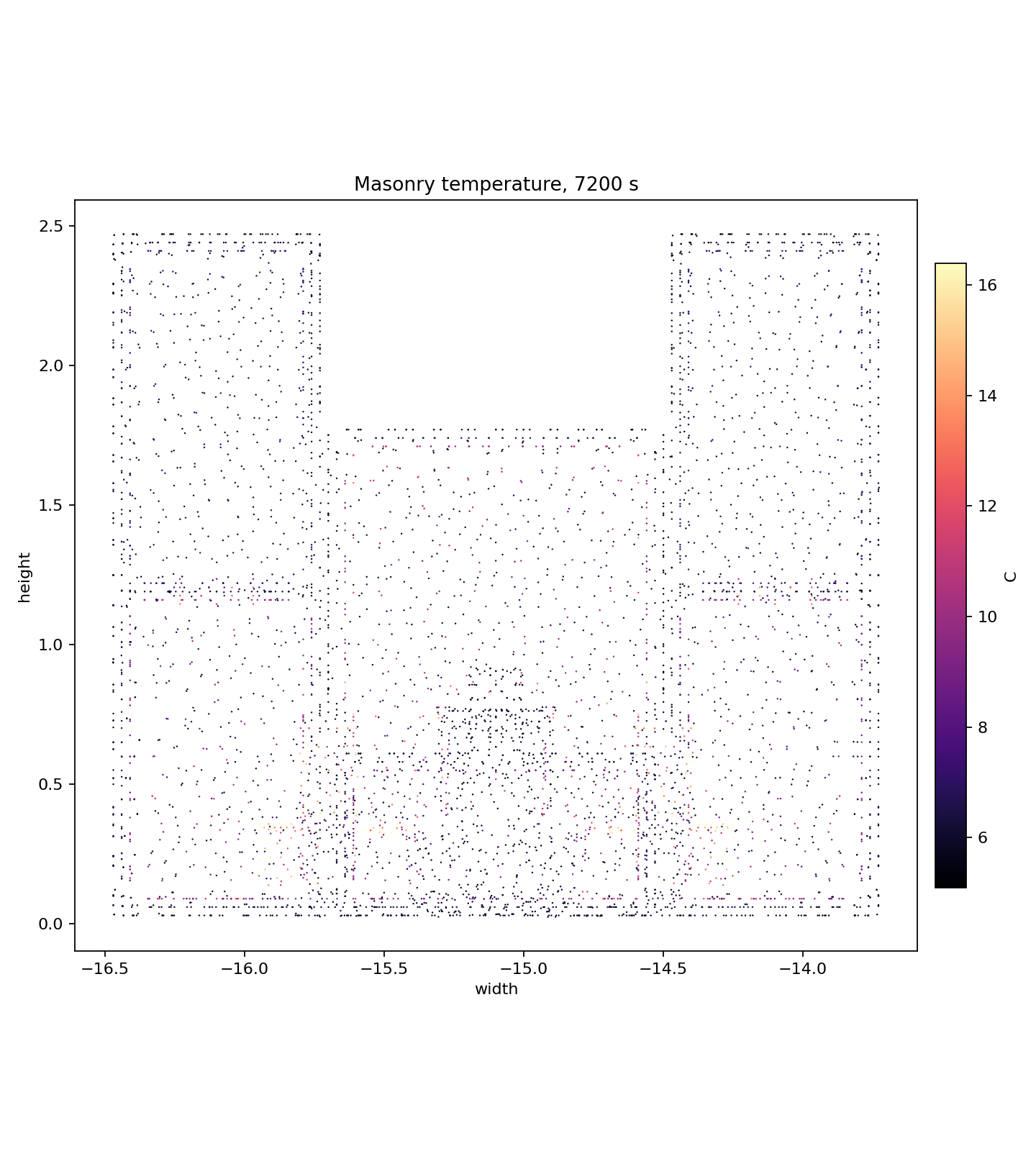
355 C2 h ultra field averageMasonry max
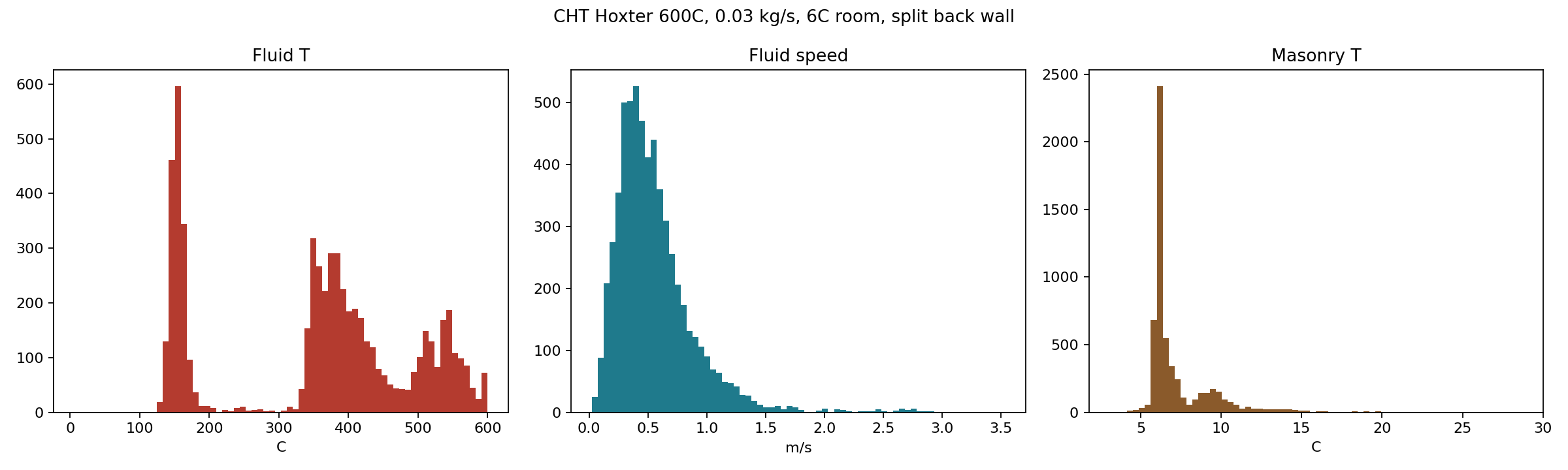
28.7 Cdirectional heating signal7200 s ultra summary
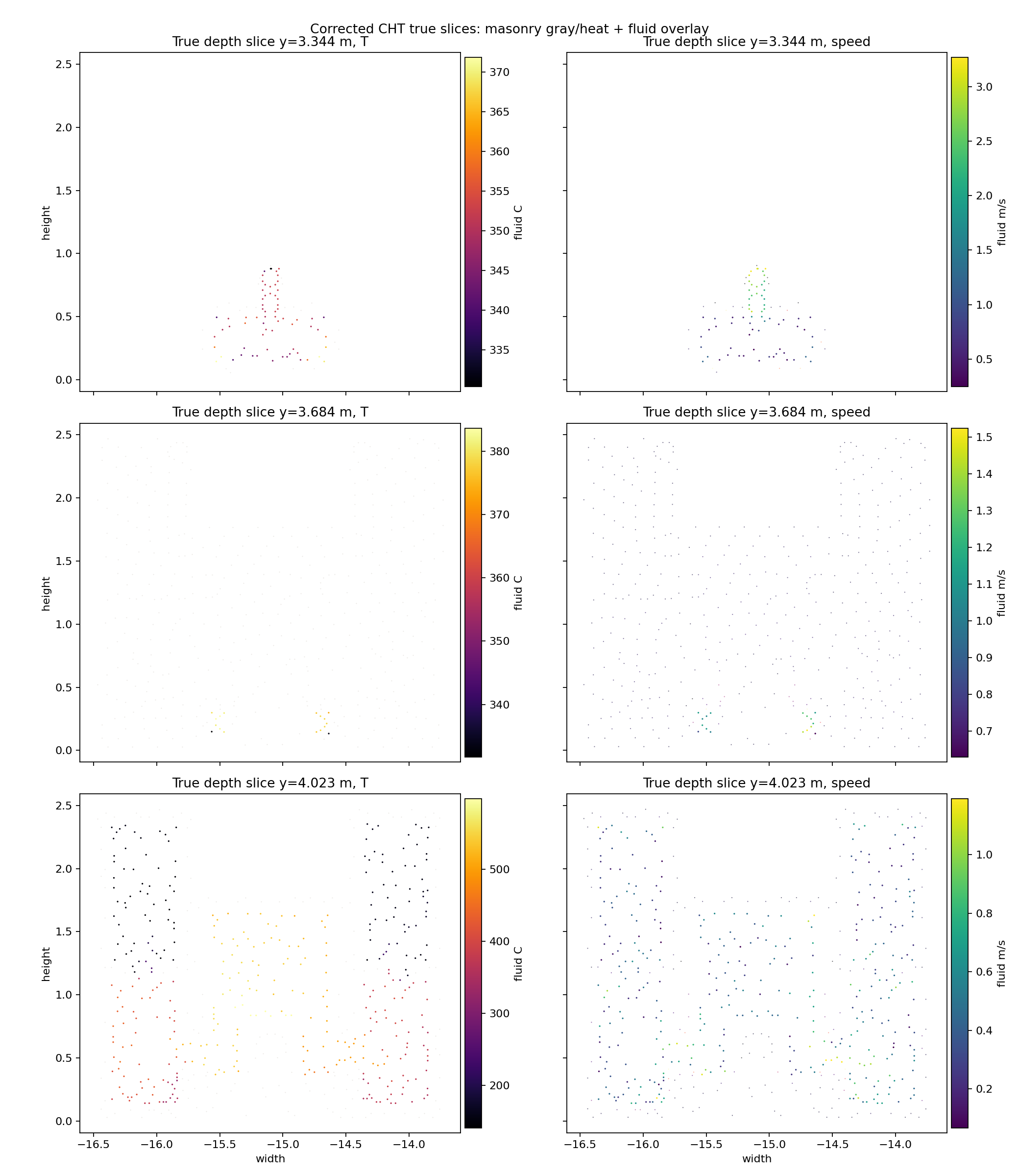
7200 s ultra true slices
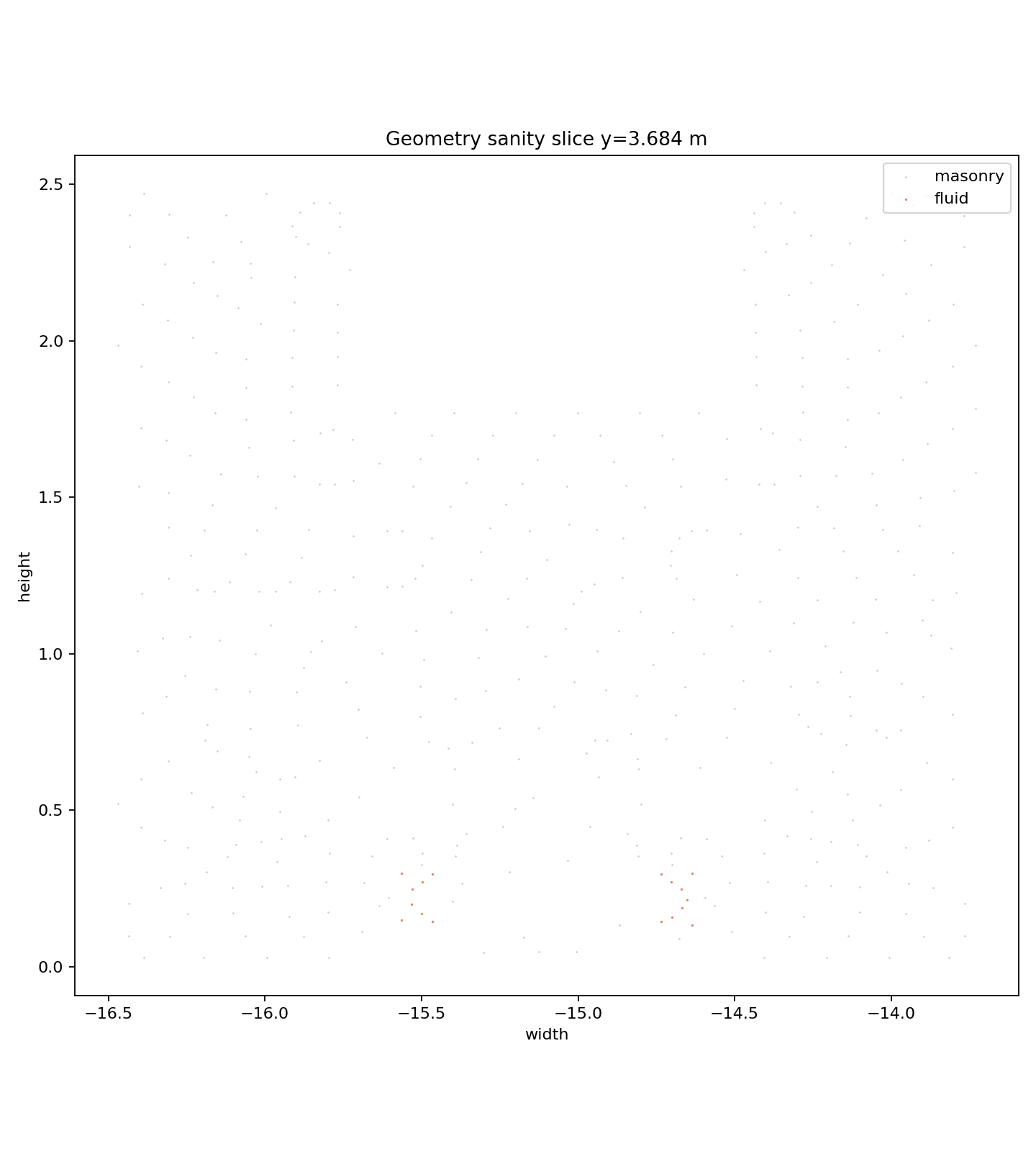
7200 s ultra geometry check
7200 s ultra fluid temperature
7200 s ultra masonry temperature
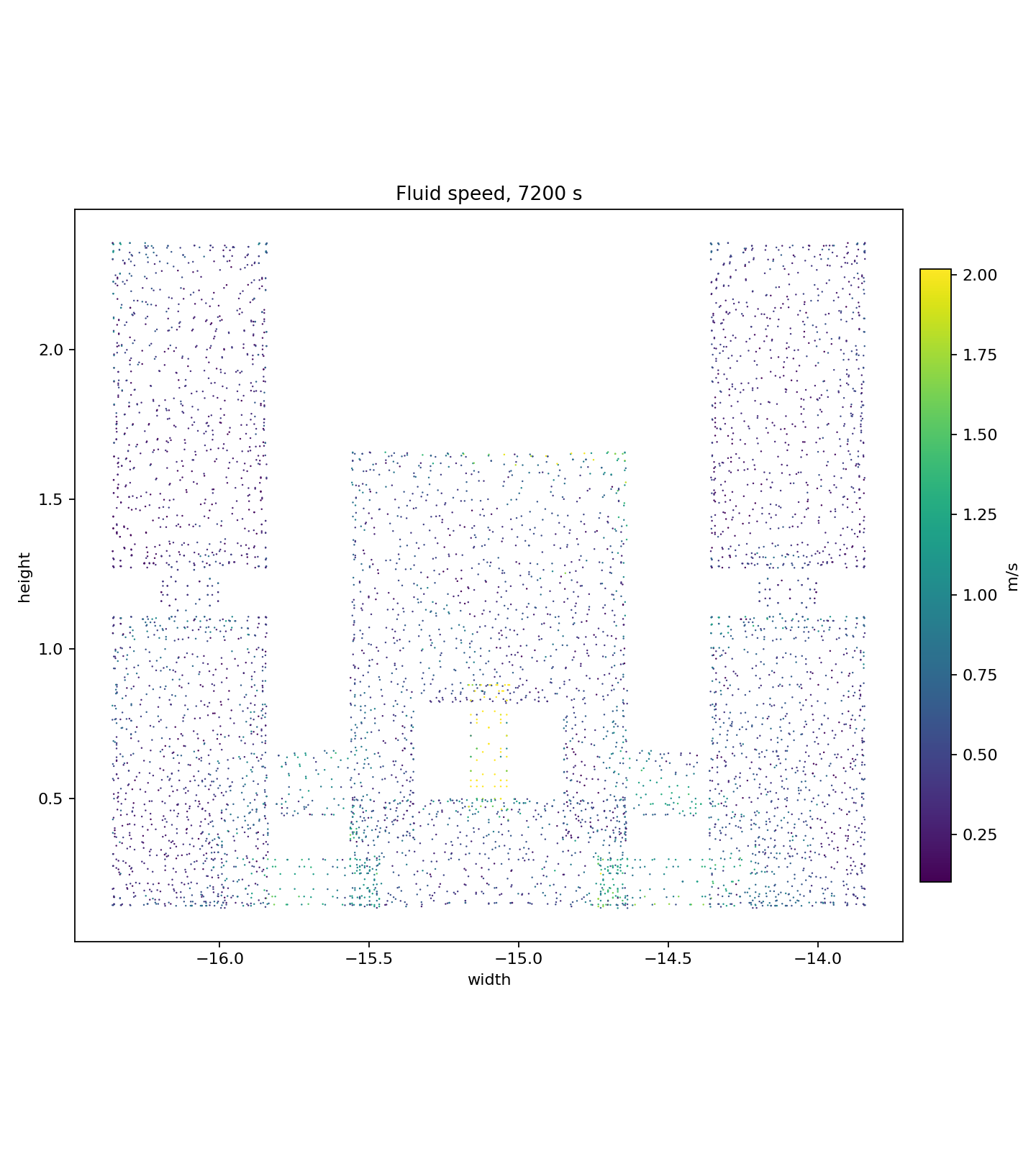
7200 s ultra fluid velocity
1800 s coarse summary
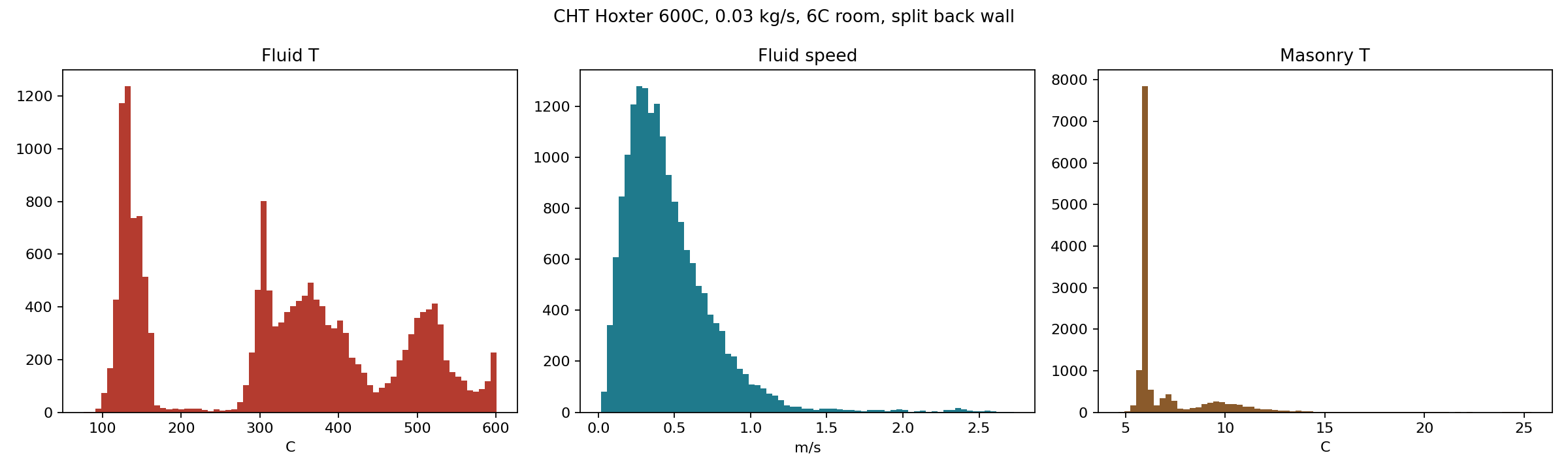
1800 s coarse true slices
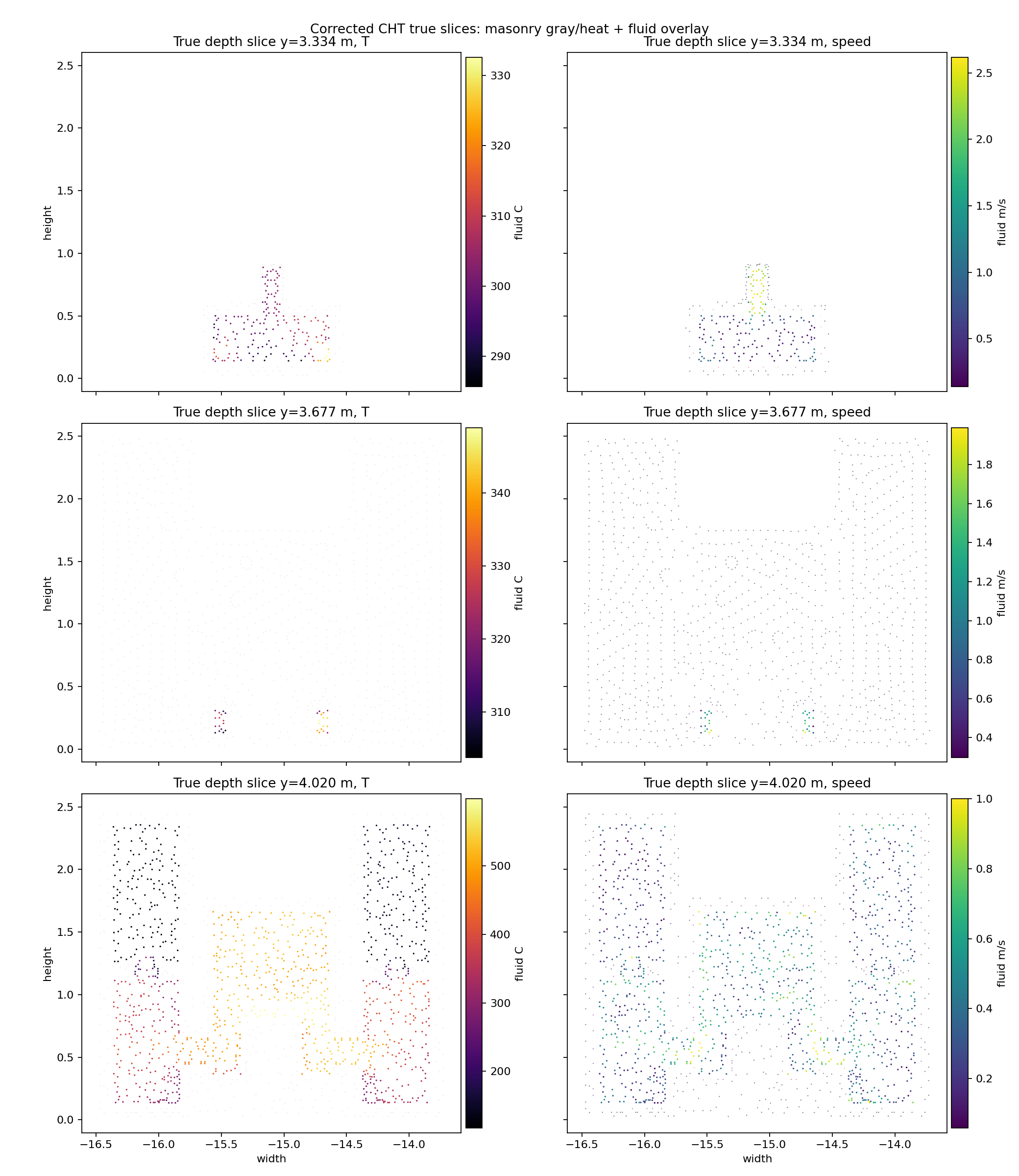
1800 s coarse geometry check
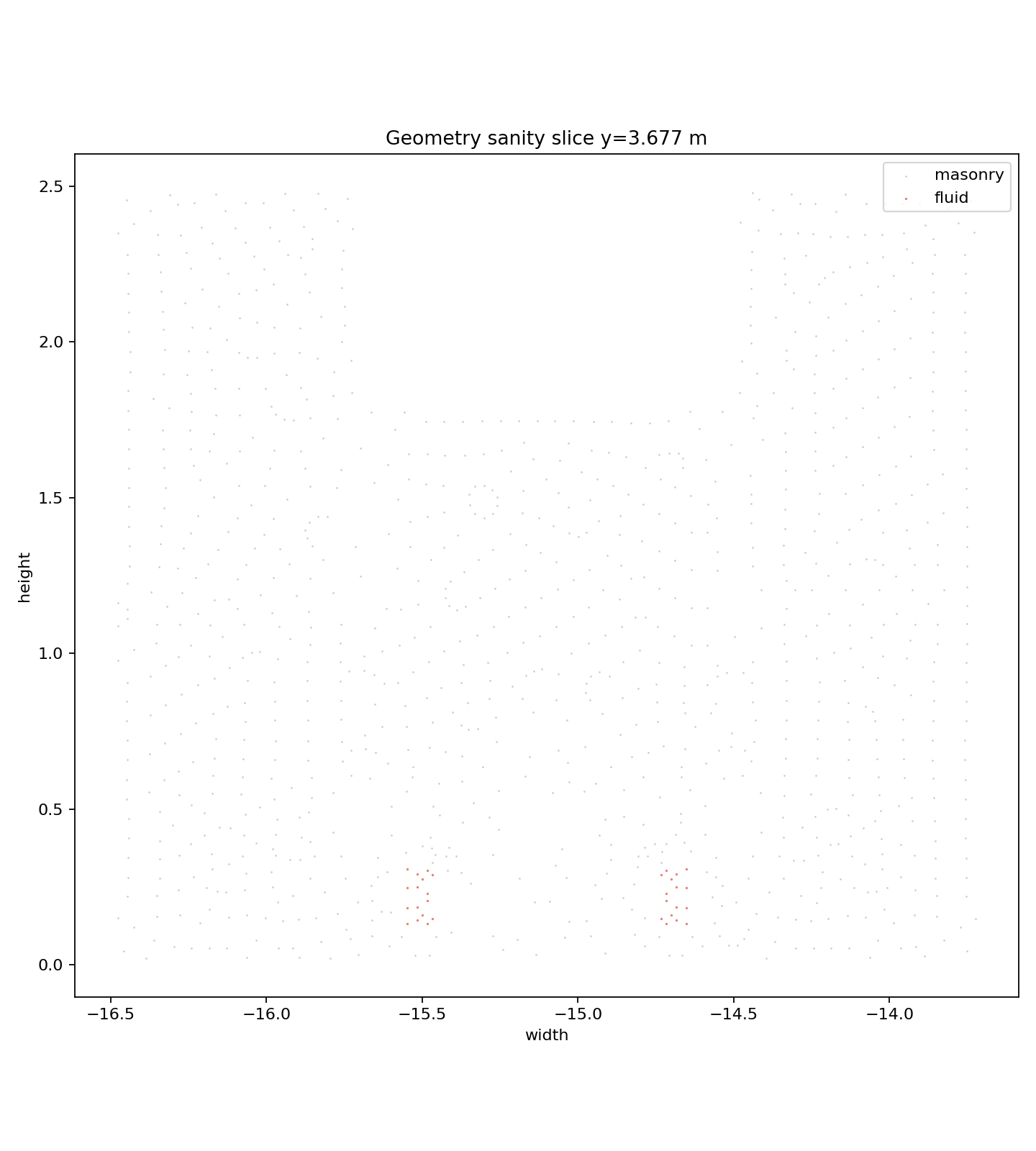
1800 s coarse fluid temperature
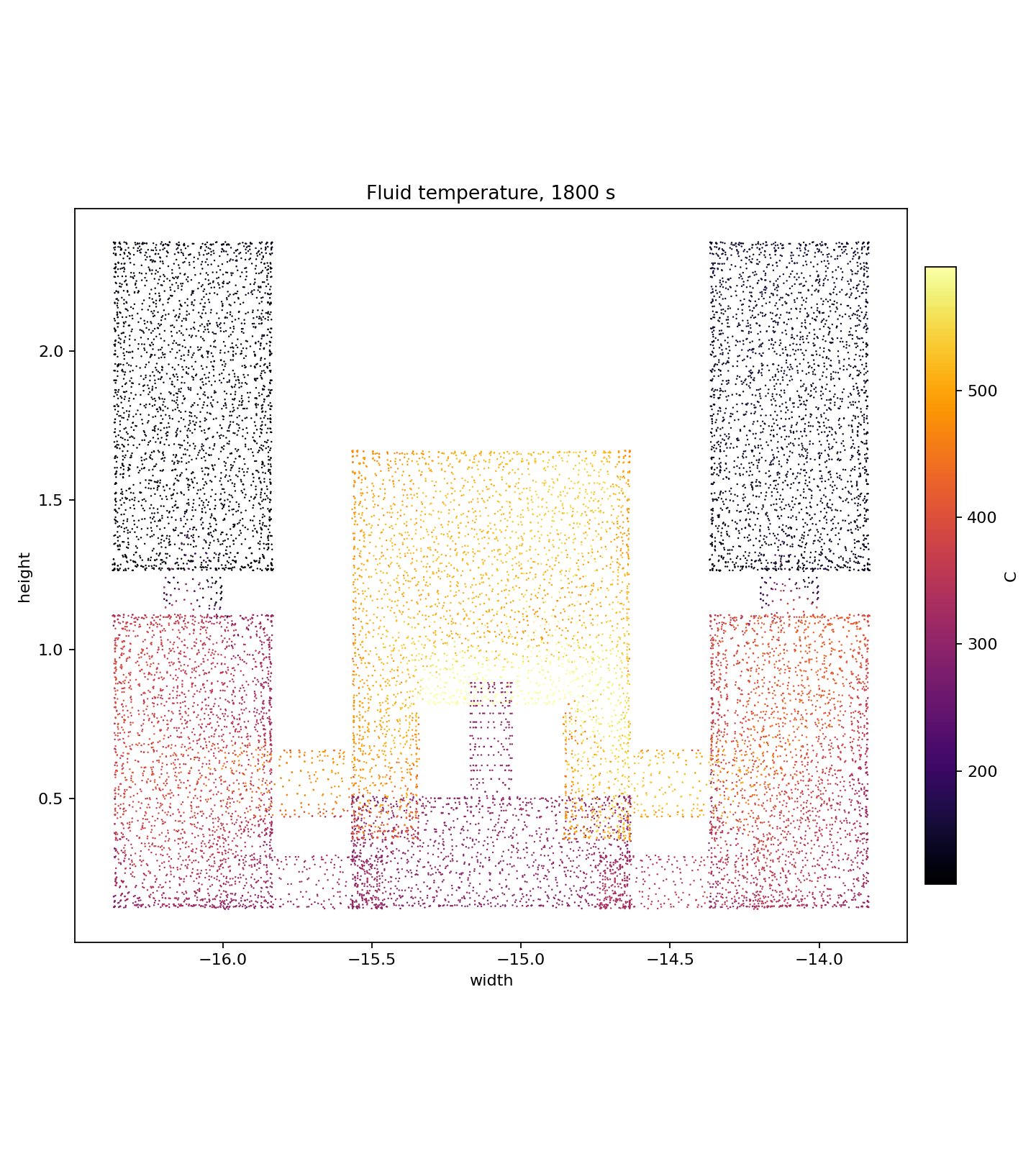
1800 s coarse masonry temperature
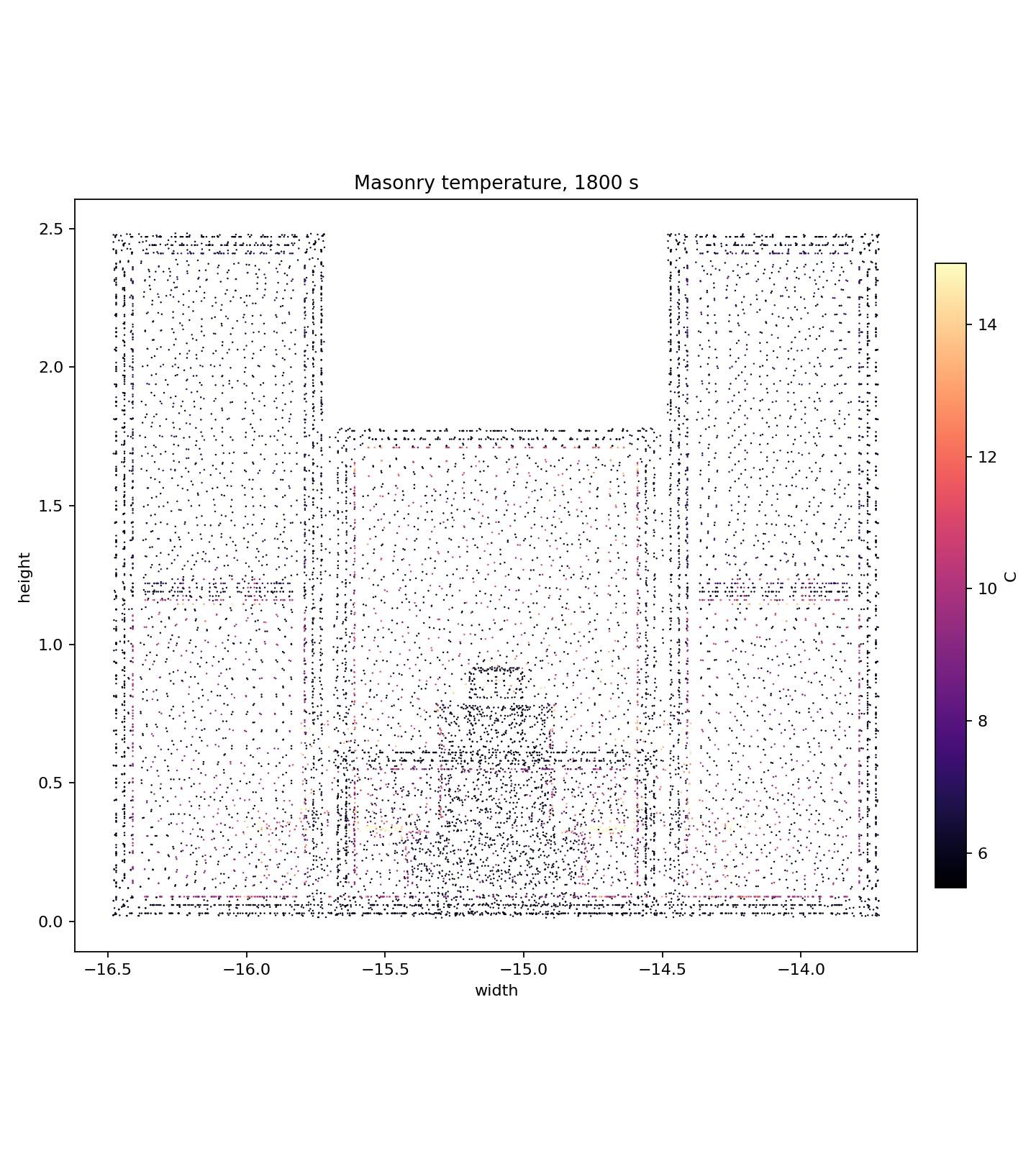
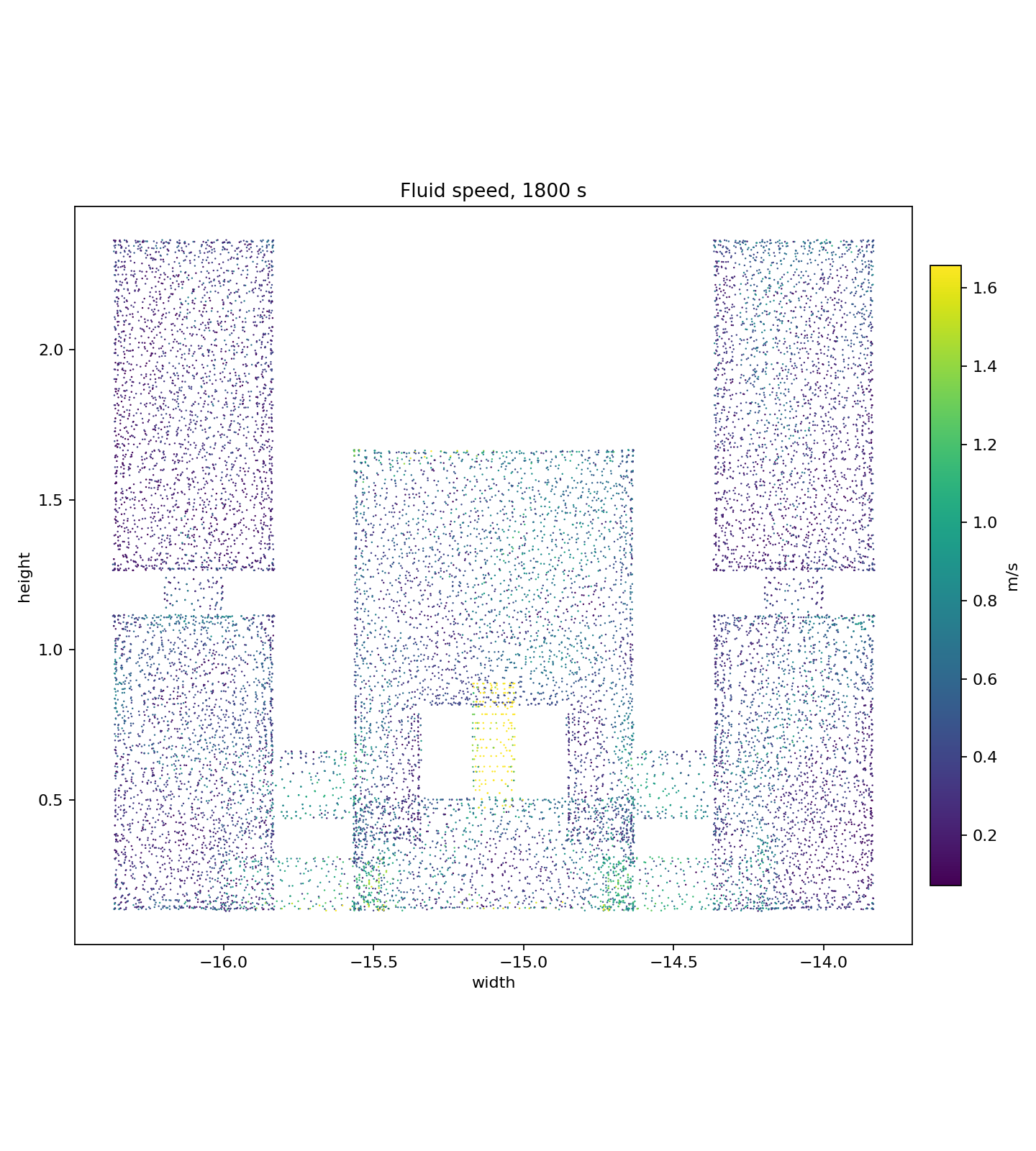
1800 s coarse fluid velocity
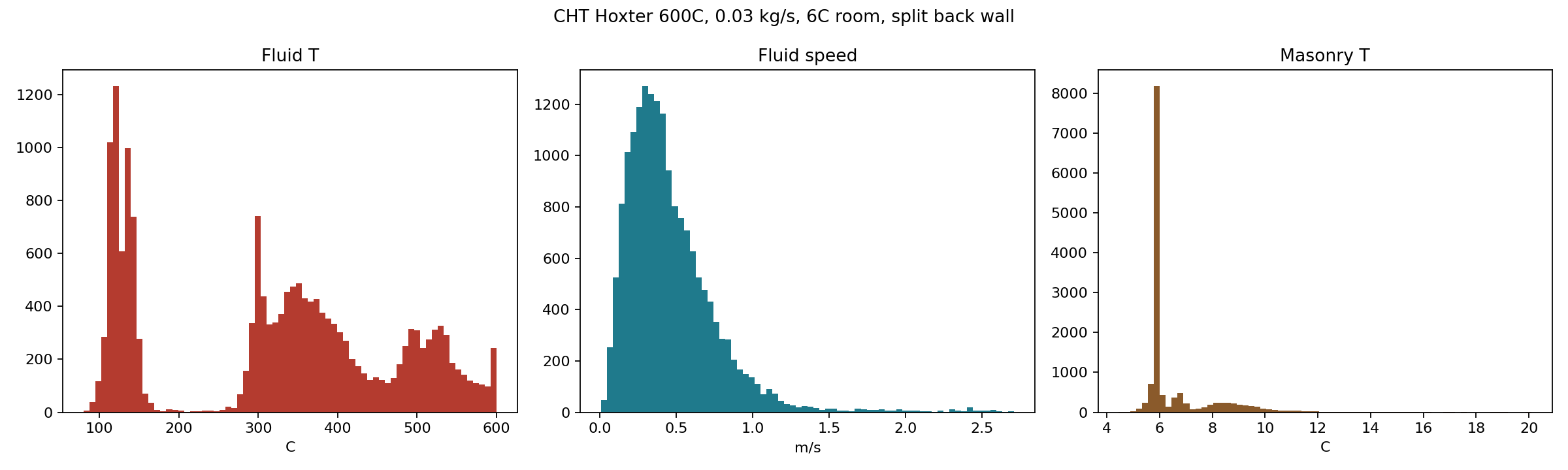
300 s coarse summary
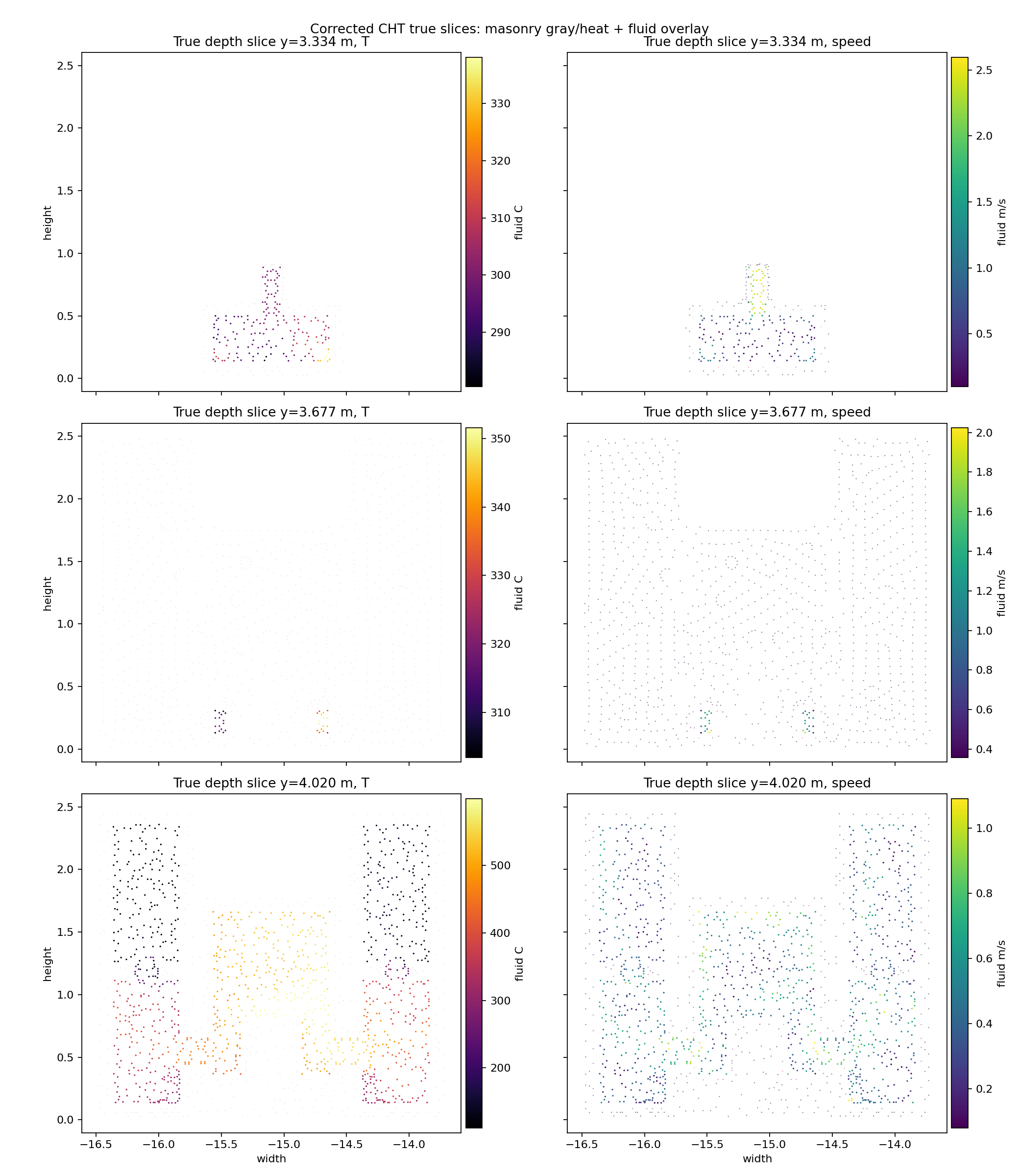
300 s coarse true slices
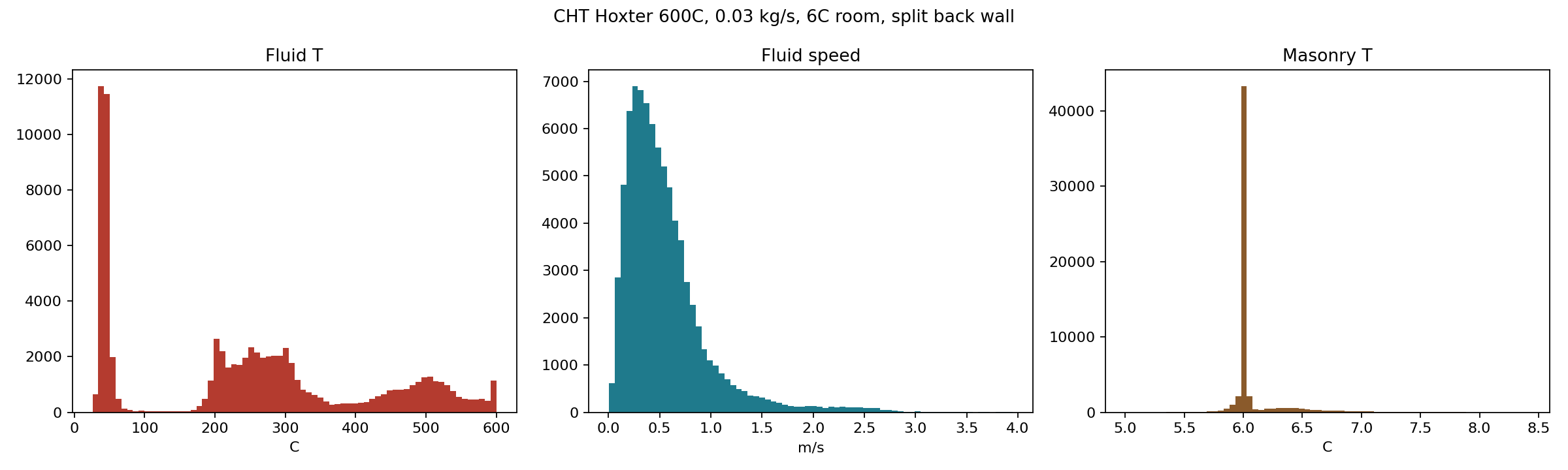
30 s summary
30 s true slices
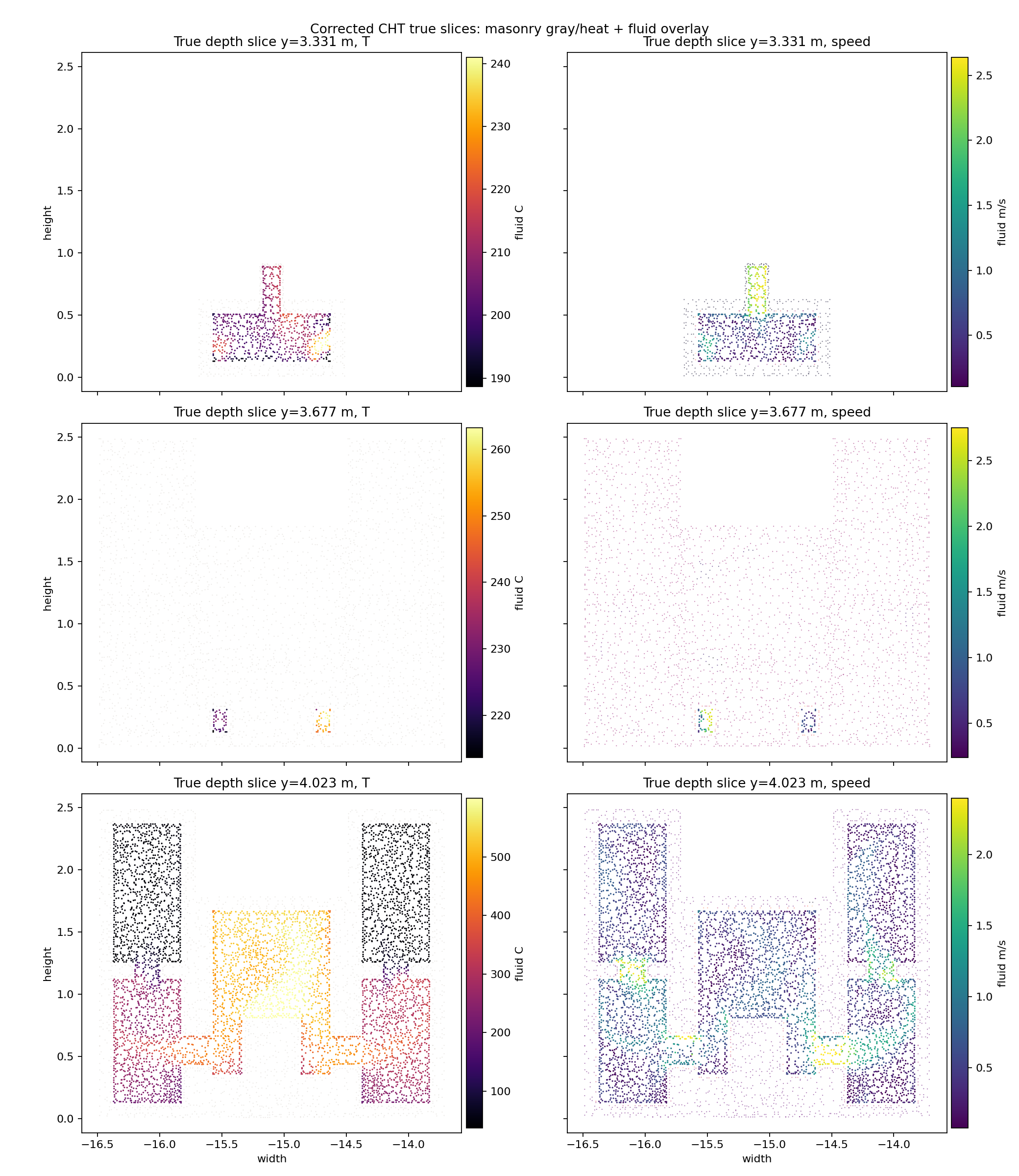
5 s summary
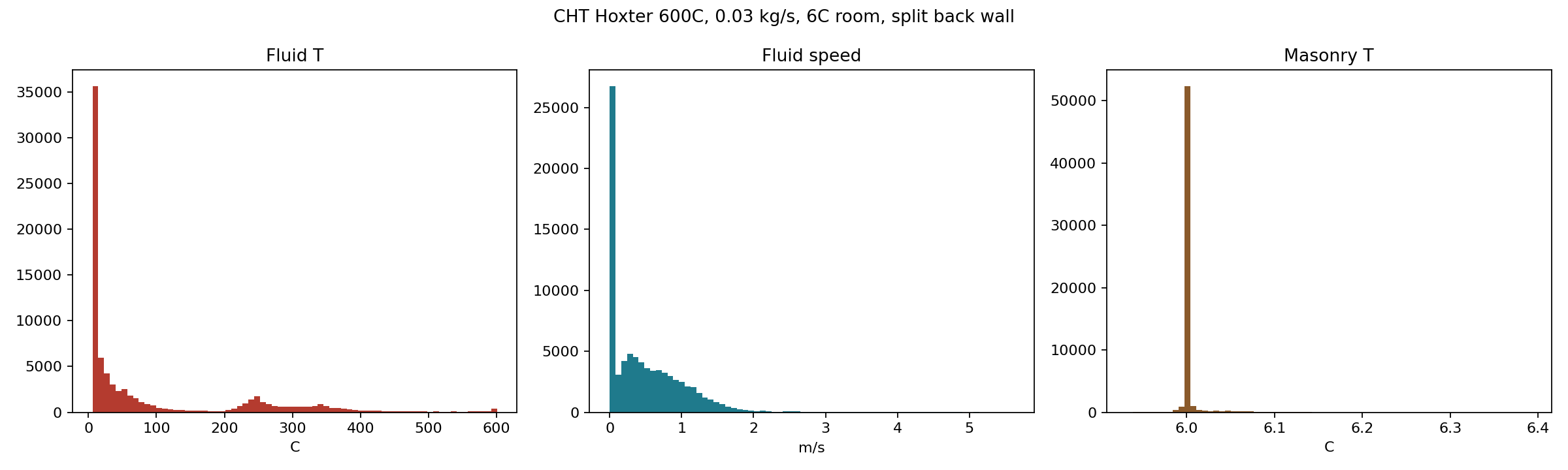
1 s summary
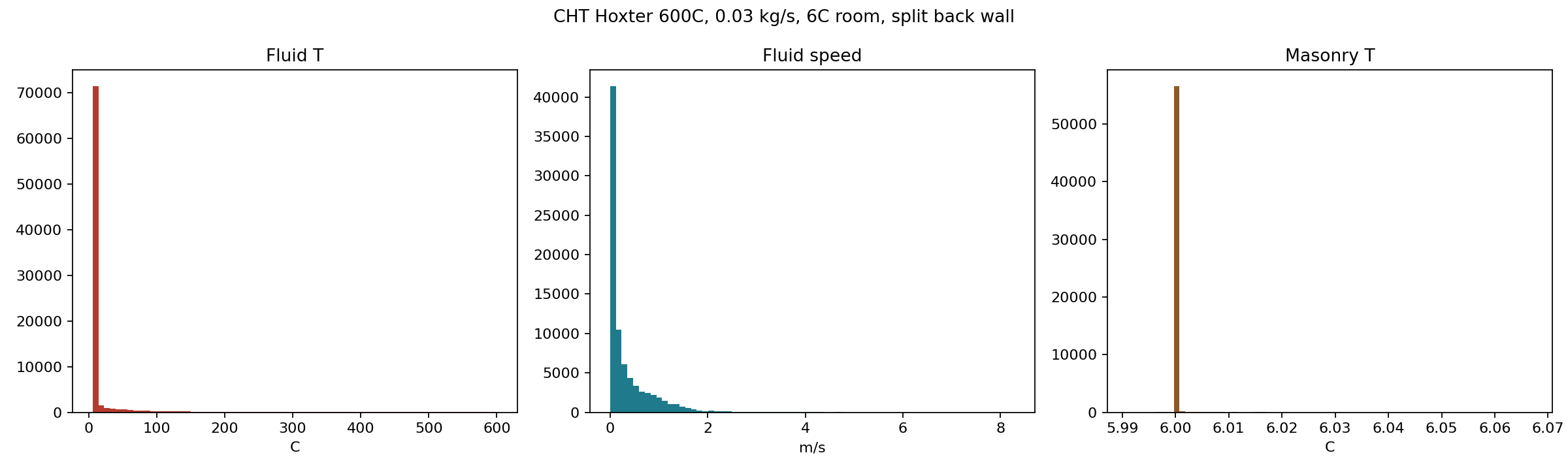
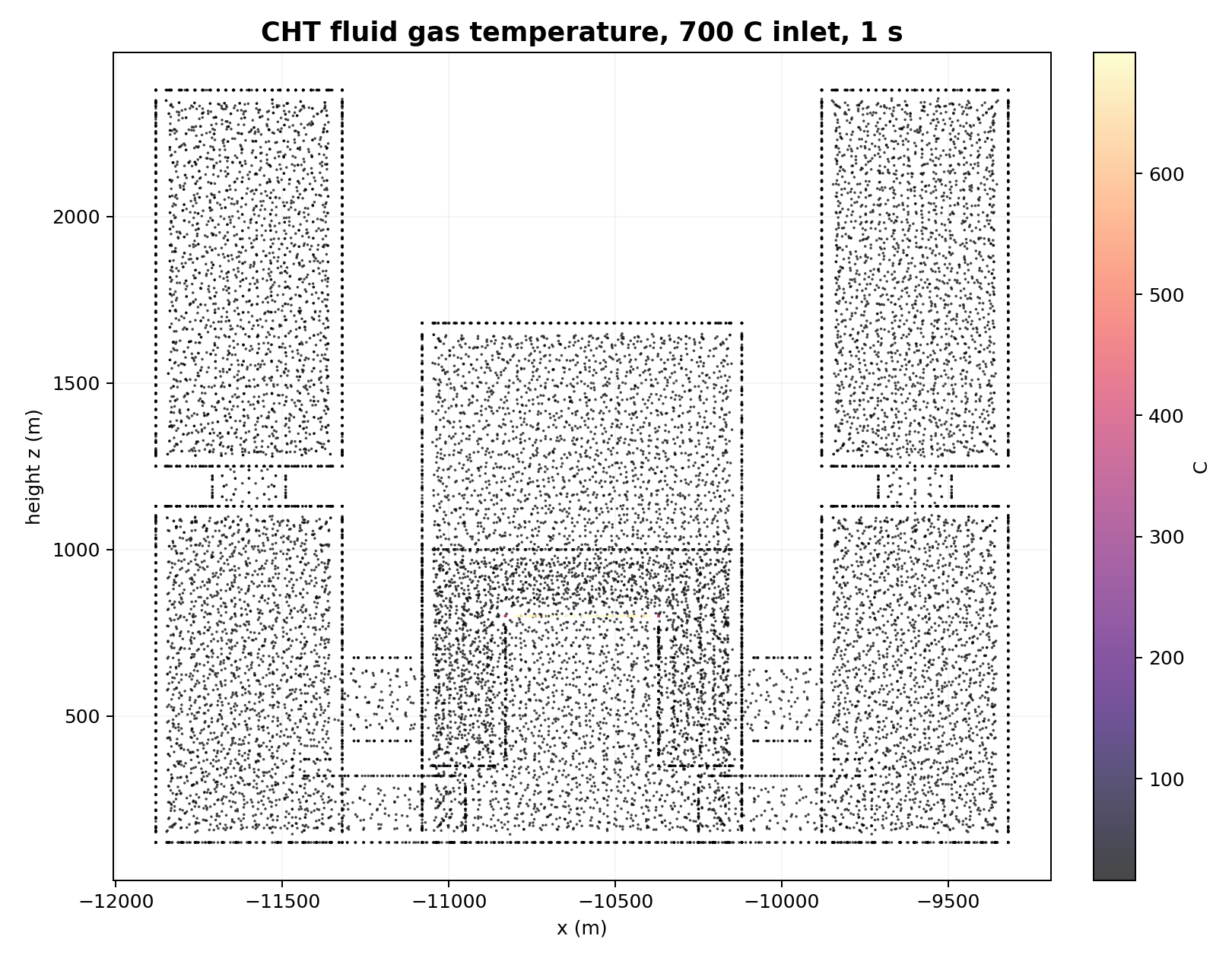
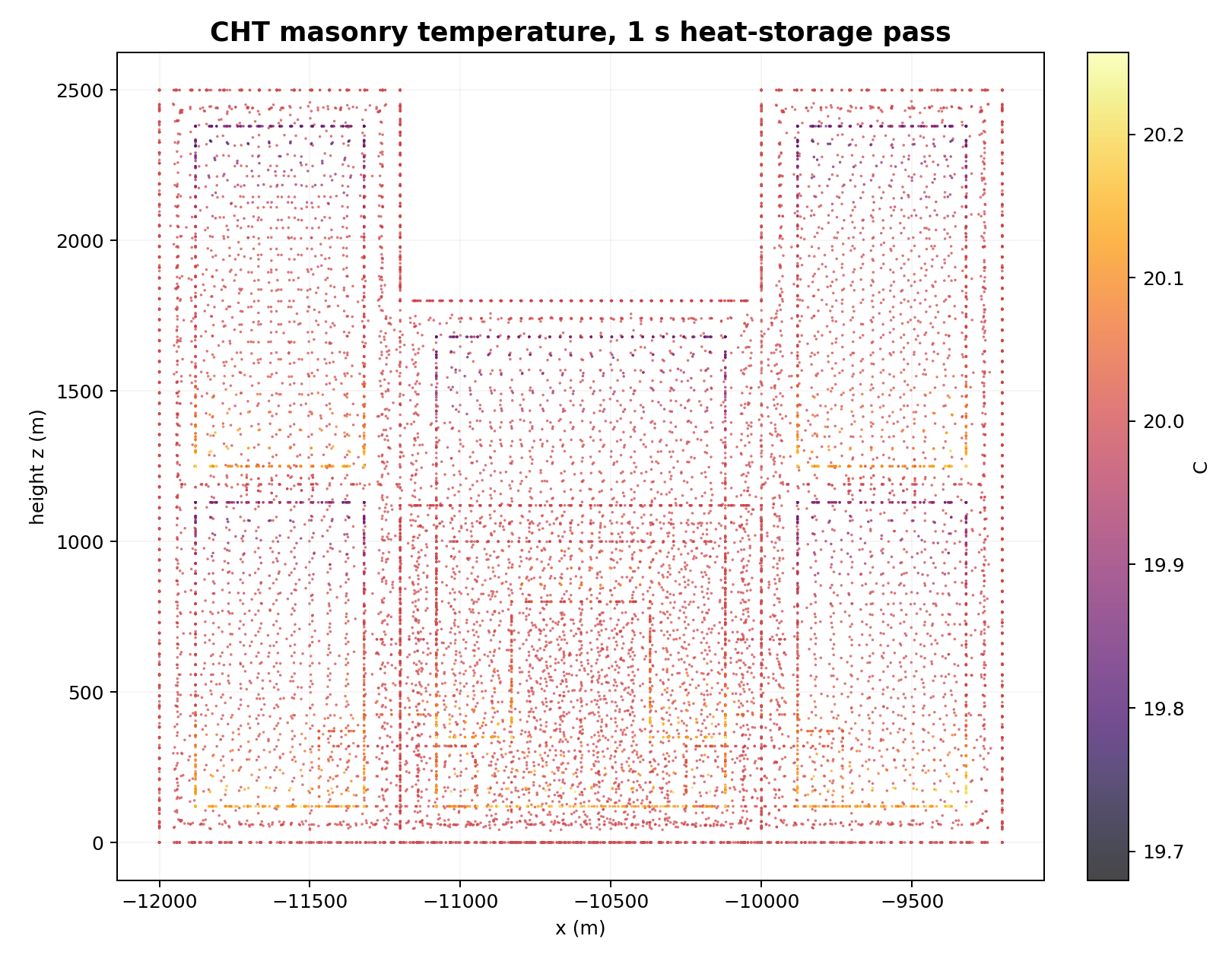
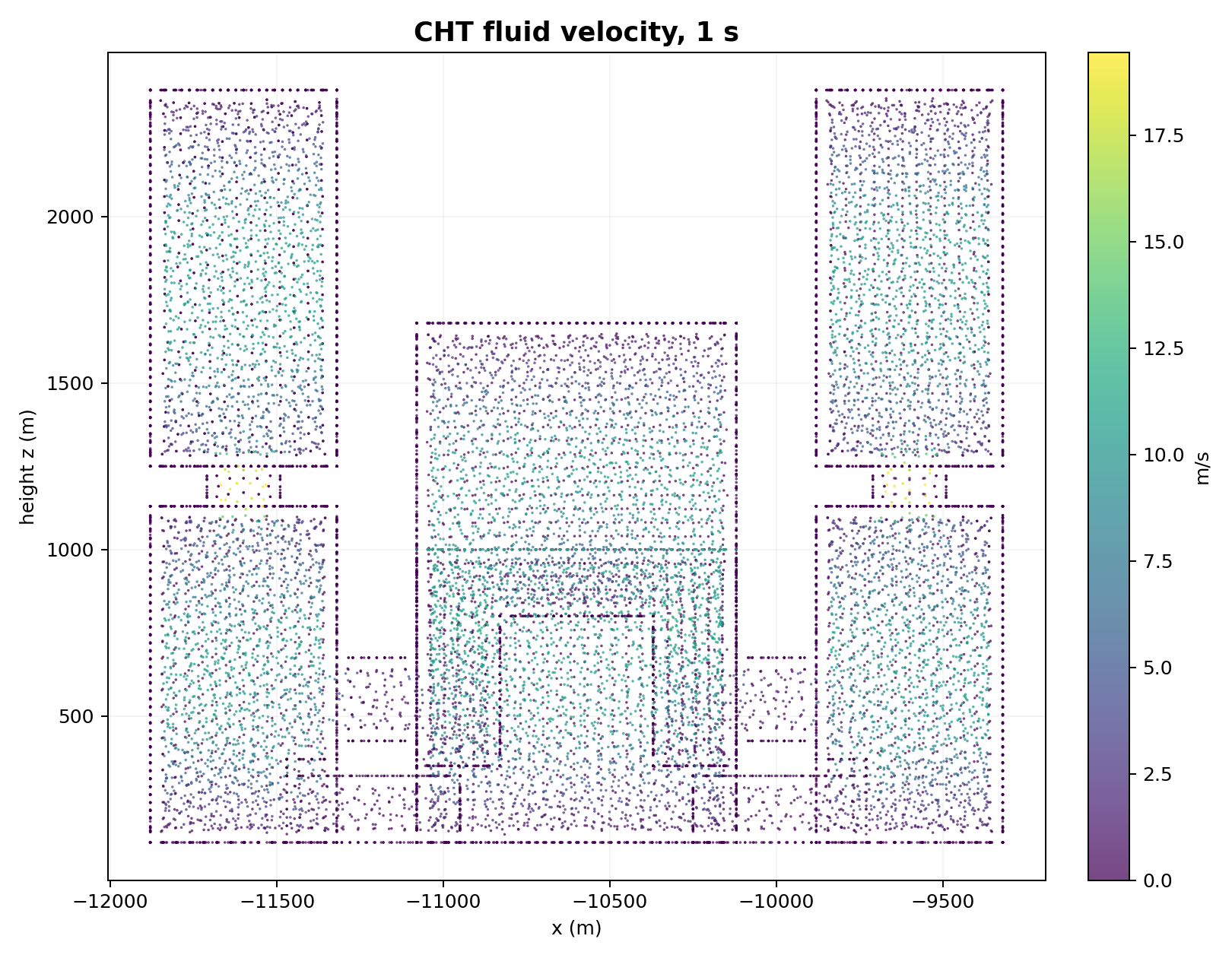
Legacy CHT
supersededpre-scale smoke runCHT time
1.0 skept for comparisonGas max
700 C973 K inletMasonry max
20.257 Cfirst heat uptake signalCHT p98 speed
10.87 m/sold unit-scale artifactCHT summary
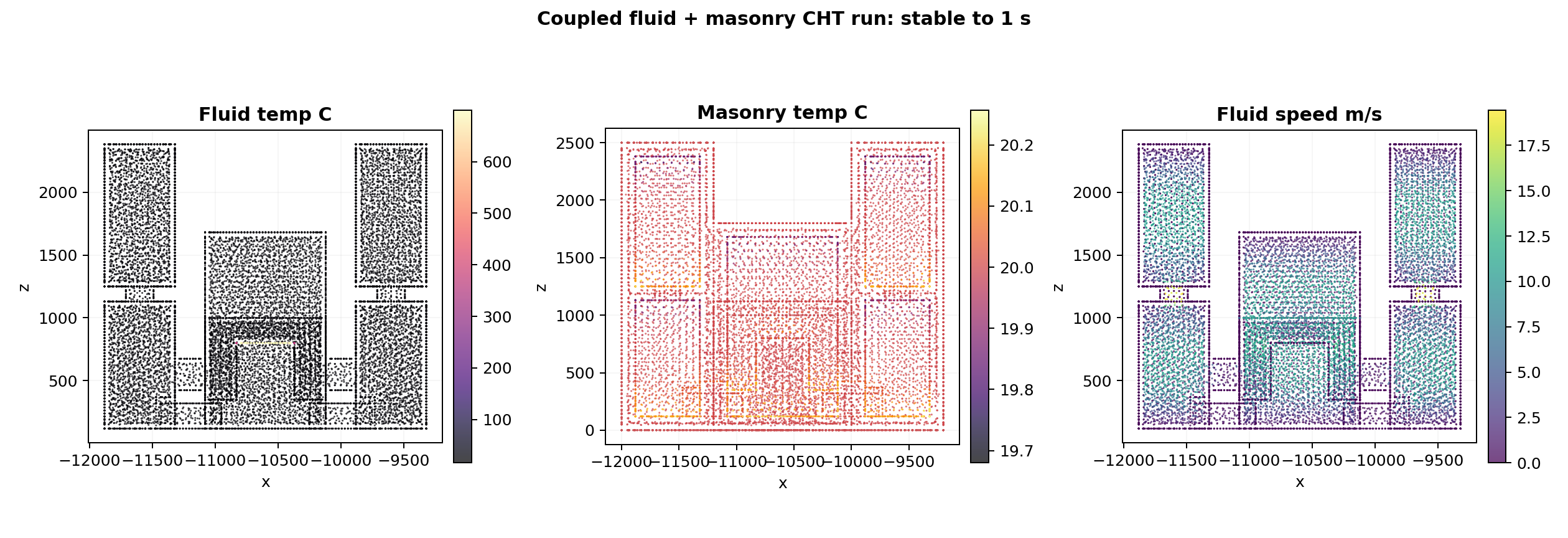
CHT fluid temperature
CHT masonry temperature
CHT fluid velocity
What this says
- The gas volume is connected and solvable.
- The lower collector/path is the fastest active route.
- Both side towers participate in the preview flow.
- Left/right balance is acceptable for a first geometry pass, around 10% mean-speed delta.
What is still missing
- The CHT case is only a smoke run, not a full firing cycle.
- The mesh now scales Shapr millimetres into OpenFOAM metres.
- The masonry material values are first-pass assumptions.
- Next useful improvement is longer corrected CHT time plus a calibrated room/back-wall heat-loss model.